
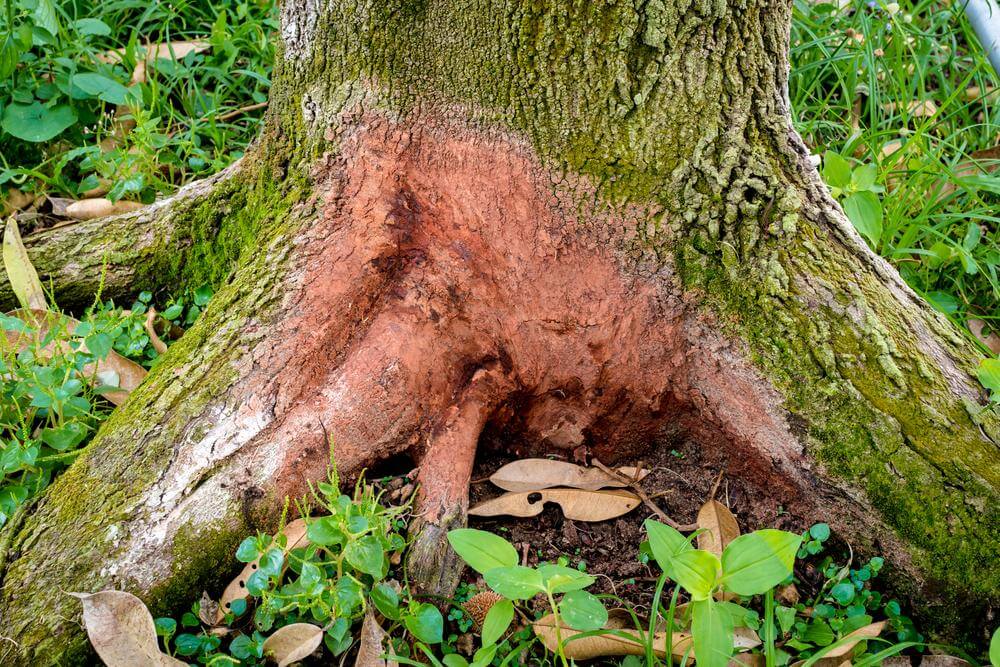
Western North Carolina’s beautiful mountain landscapes are home to countless mature trees, but maintaining healthy trees can be challenging when soil conditions and weather patterns work against them.
One of the most common challenges homeowners face is determining whether an unhealthy tree is suffering from root rot or drought stress. Both conditions can cause yellowing leaves, wilting, branch dieback, and declining growth. However, their causes and treatment approaches are very different.
In Hendersonville, Asheville, and surrounding communities, clay-rich soils can make diagnosing these problems particularly complicated.
At Epperson Tree Service, we provide professional tree and shrub health services to help homeowners identify tree health concerns and determine appropriate care.
Why Western NC Red Clay Soil Can Be Challenging for Trees
Red clay soil is common throughout portions of Western North Carolina. While clay can retain valuable moisture and nutrients, its dense structure creates challenges for tree root development.
Clay-rich soils generally drain more slowly than sandy soils, particularly when compacted. After heavy rainfall, water can remain around tree roots for extended periods.
During prolonged dry weather, the same soil may become hard and compact, limiting water infiltration and making it difficult for roots to access moisture.
These changing conditions can create two very different problems: excessive moisture that contributes to root damage and insufficient available water that causes drought stress.
Understanding which condition affects your tree is essential before attempting treatment.
What Is Root Rot in Trees?
Root rot occurs when roots deteriorate, often because of infections involving soilborne organisms such as Phytophthora or certain fungi.
Poor drainage and prolonged soil saturation can create conditions favorable to some root rot pathogens. Waterlogged soil also reduces oxygen availability, weakening root function.
As roots become damaged, trees struggle to absorb water and essential nutrients.
Common Signs of Root Rot
Homeowners should watch for:
- Yellowing leaves despite consistently moist soil
- Wilting foliage that doesn’t improve after rainfall
- Reduced growth and thinning canopies
- Branch dieback or premature leaf loss
- Soft, decaying roots or damaged tissue near the root collar
- Fungal growth around the base of certain affected trees
Not all root diseases produce visible mushrooms, and these symptoms alone cannot confirm root rot.
Professional assessment is often necessary to distinguish root disease from other soil-related problems.
What Is Drought Stress in Trees?
Drought stress develops when trees cannot absorb enough water to meet their needs.
Although Western North Carolina receives substantial annual rainfall, periods of limited precipitation and high temperatures can still create stressful growing conditions.
Trees growing in shallow, compacted, or restricted soil areas may be particularly vulnerable.
Common Signs of Drought Stress
Symptoms often include:
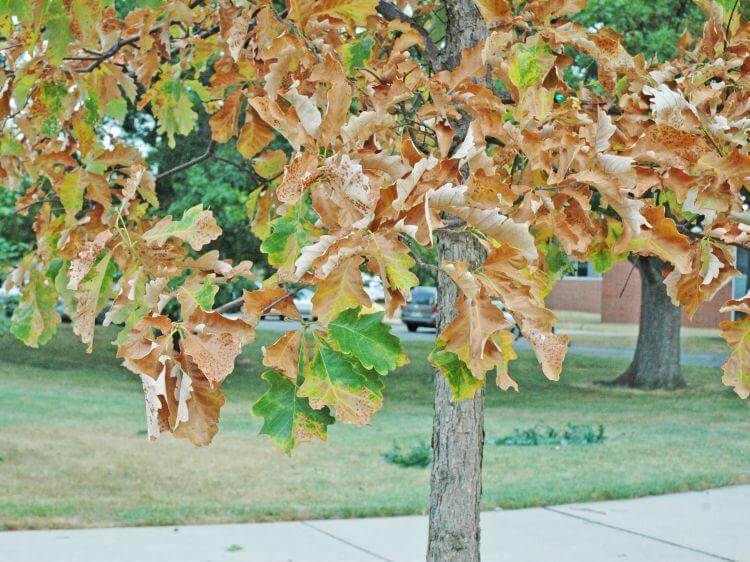
- Wilted or curling leaves during hot weather
- Brown, crispy leaf edges
- Premature leaf drop
- Smaller-than-normal leaves
- Reduced seasonal growth
- Dying twigs and thinning branches
Newly planted trees are especially vulnerable because their root systems have not fully established.
Mature trees may tolerate dry conditions longer, but prolonged drought can still weaken them and increase vulnerability to insects and disease.
Professional tree health assessments can help identify contributing environmental conditions.
Root Rot vs. Drought Stress: How to Tell the Difference
Because both conditions affect water movement within trees, their symptoms frequently overlap.
The most useful starting point is examining soil moisture and drainage.
Check Soil Moisture Below the Surface
Dry surface soil doesn’t necessarily mean the entire root zone lacks moisture.
Check several inches below the surface in accessible areas away from major roots.
If soil remains saturated long after rainfall, poor drainage may be contributing to root problems.
If the soil is consistently dry throughout the accessible root zone during hot weather, drought stress becomes a stronger possibility.
Observe Recent Weather Conditions
Consider whether symptoms appeared after prolonged rainfall or extended dry weather.
Root problems may become noticeable after repeated periods of waterlogging, while drought-related symptoms frequently intensify during hot, dry conditions.
Look for Additional Tree Health Problems
Insects, fungal diseases, soil compaction, and physical root damage can produce similar symptoms.
Epperson Tree Service also provides insect and disease control services to help address tree health issues when pests or diseases are involved.
A proper diagnosis may require professional root inspection or laboratory testing.
How to Help Trees Recover From Root Rot or Drought
Treatment depends on identifying the underlying cause.
Improving Conditions for Root-Damaged Trees
When poor drainage contributes to root problems, potential corrective measures include:
- Reducing unnecessary irrigation
- Addressing surface drainage issues
- Avoiding additional soil compaction
- Keeping excess mulch away from the trunk
- Obtaining a professional diagnosis before applying treatments
Severely decayed roots may not recover, making early intervention particularly important.
Helping Drought-Stressed Trees
Trees experiencing insufficient moisture may benefit from slow, deep watering that reaches the active root zone.
Organic mulch can help conserve moisture and moderate soil temperatures when applied correctly.
Avoid excessive fertilization during severe drought, as stimulating new growth can increase water demand.
Epperson Tree Service offers tree fertilization services when nutrient deficiencies are identified and treatment is appropriate.
When Does an Unhealthy Tree Become a Safety Hazard?
Some trees recover when environmental conditions improve. Others may develop significant structural weaknesses, especially when root damage affects stability.
Warning signs include sudden leaning, soil lifting near the trunk, extensive branch dieback, or visible deterioration around major roots.
Trees showing these symptoms near homes, driveways, or other structures should receive prompt professional evaluation.
When a tree cannot be safely preserved, professional tree removal services may be necessary to reduce property hazards.
Protect Your Trees With Epperson Tree Service
Healthy trees begin with healthy roots, but Western North Carolina’s clay-rich soils and changing weather conditions can make root health difficult to maintain.
Recognizing the differences between drought stress and root rot can help homeowners avoid ineffective treatments and address problems before they become more severe.
With more than 20 years of experience, Epperson Tree Service provides tree care solutions throughout Hendersonville, Asheville, and surrounding Western North Carolina communities.
Whether you’re concerned about yellowing leaves, declining branches, or possible root damage, our team can help evaluate your trees and recommend appropriate next steps.
Contact Epperson Tree Service today at (828) 606-4980 to schedule a tree health assessment and protect your property’s valuable trees.

