
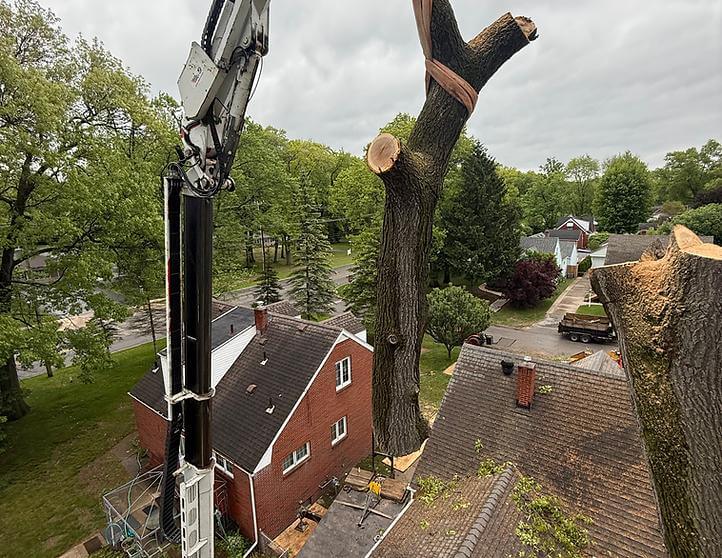
Removing a large tree is challenging enough on flat, open land. But in Western North Carolina, where steep slopes, narrow driveways, and densely wooded properties are common, traditional tree removal methods aren’t always practical or safe. That’s where crane-assisted tree removal becomes an important solution.
For homeowners in Hendersonville and surrounding mountain communities, crane-assisted removal offers a controlled approach to handling dangerous, oversized, or difficult-to-access trees while minimizing risks to nearby structures and landscapes.
At Epperson Tree Service, we provide professional crane services in Hendersonville, NC to help property owners tackle complex tree removal projects safely and efficiently.
What Is Crane-Assisted Tree Removal?
Crane-assisted tree removal involves using specialized lifting equipment to support and lower sections of a tree during removal.
Rather than allowing heavy branches or trunk sections to fall to the ground, a trained crew coordinates cutting and lifting operations so that tree sections can be moved to a designated landing area.
This technique is particularly useful when trees are positioned near buildings, growing on steep terrain, or located in spaces where conventional equipment cannot operate effectively.
Crane removal requires careful planning, experienced operators, and precise coordination between the crane operator and tree removal professionals.
When Is Crane-Assisted Tree Removal Necessary?
Not every tree requires a crane. However, certain conditions make crane assistance a safer or more practical option.
1. Large Trees Growing Close to Homes
Mature trees can become serious hazards when growing directly beside houses, garages, or other structures.
Traditional removal methods may require extensive rigging or lowering heavy branches through restricted spaces.
A crane can support and lift selected sections away from vulnerable structures, reducing the need to drop large pieces near the home.
Homeowners concerned about hazardous trees should consider professional tree removal and trimming services before structural problems become emergencies.
2. Trees on Steep Mountain Slopes
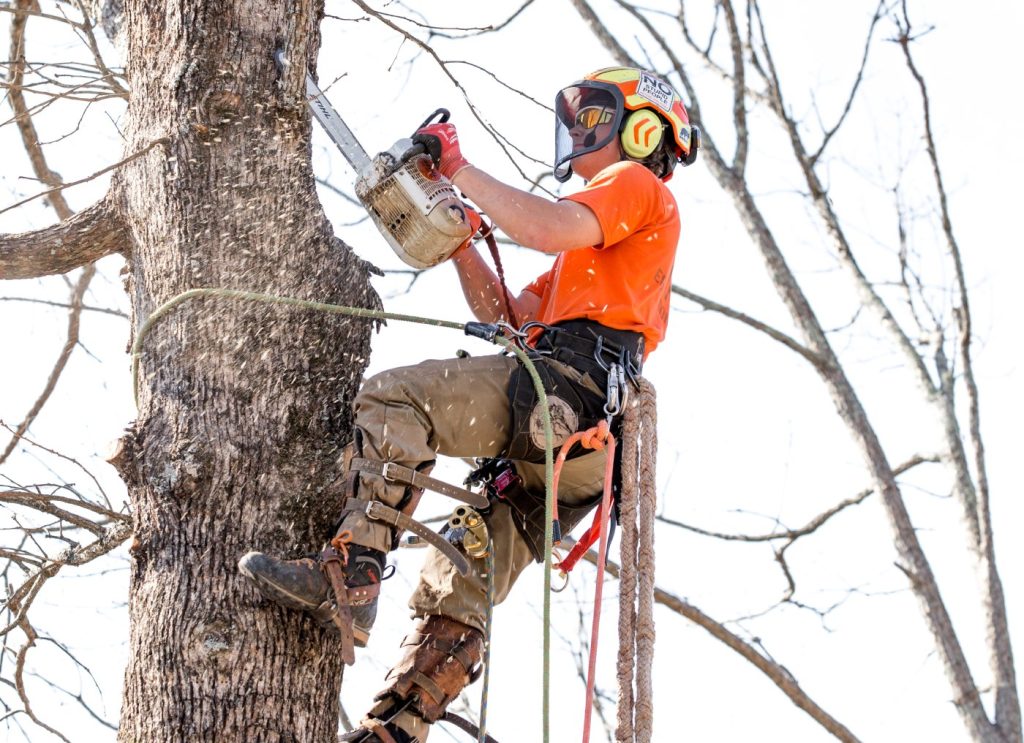
Western North Carolina’s mountainous terrain creates unique challenges for tree removal.
Steep hillsides can limit equipment access, complicate worker positioning, and increase the difficulty of controlling falling debris.
When an appropriate crane setup location is available, crane-assisted removal can allow crews to work from a safer position while lifting tree sections away from unstable or difficult terrain.
However, crane placement must always account for ground stability, slope conditions, and equipment access.
3. Limited Space for Traditional Tree Removal
Many mountain properties have narrow driveways, retaining walls, landscaping features, and nearby neighboring homes.
These obstacles can leave little room for safely lowering large tree sections.
Crane-assisted removal allows crews to move heavy sections toward a suitable landing zone rather than bringing every piece directly to the base of the tree.
This can be particularly beneficial for properties with limited working space.
4. Storm-Damaged or Structurally Compromised Trees
Trees weakened by storms, disease, or internal decay can become unpredictable during removal.
Broken branches, split trunks, and unstable root systems may make climbing or conventional dismantling especially hazardous.
Depending on the tree’s condition, crane assistance can help support compromised sections during removal.
For urgent situations involving fallen or dangerous trees, Epperson Tree Service offers 24/7 emergency tree services throughout the Hendersonville area.
How Crane-Assisted Tree Removal Protects Tight Mountain Lots
One of the biggest advantages of crane-assisted tree removal is the ability to manage difficult projects with greater control over where tree sections are moved.
Reduces the Risk of Property Damage
Large trees growing near roofs, decks, fences, and utility structures require careful handling.
Crane-assisted techniques allow qualified crews to control heavy sections during the lifting process, helping reduce the risk of accidental impacts.
Helps Preserve Landscaping
Traditional tree removal sometimes requires moving heavy logs and branches across lawns, gardens, or planted areas.
With appropriate crane positioning, crews may be able to lift sections over sensitive areas instead.
Although cranes also require suitable access and ground protection, thoughtful planning can minimize unnecessary landscape disturbance.
Improves Efficiency on Complex Projects
Removing large trees through traditional rigging methods can be time-consuming, particularly when space is limited.
A crane can streamline certain operations by transferring heavy sections directly to a designated processing area.
This may reduce the amount of manual handling required and improve overall project efficiency.
What Happens During a Crane-Assisted Tree Removal?
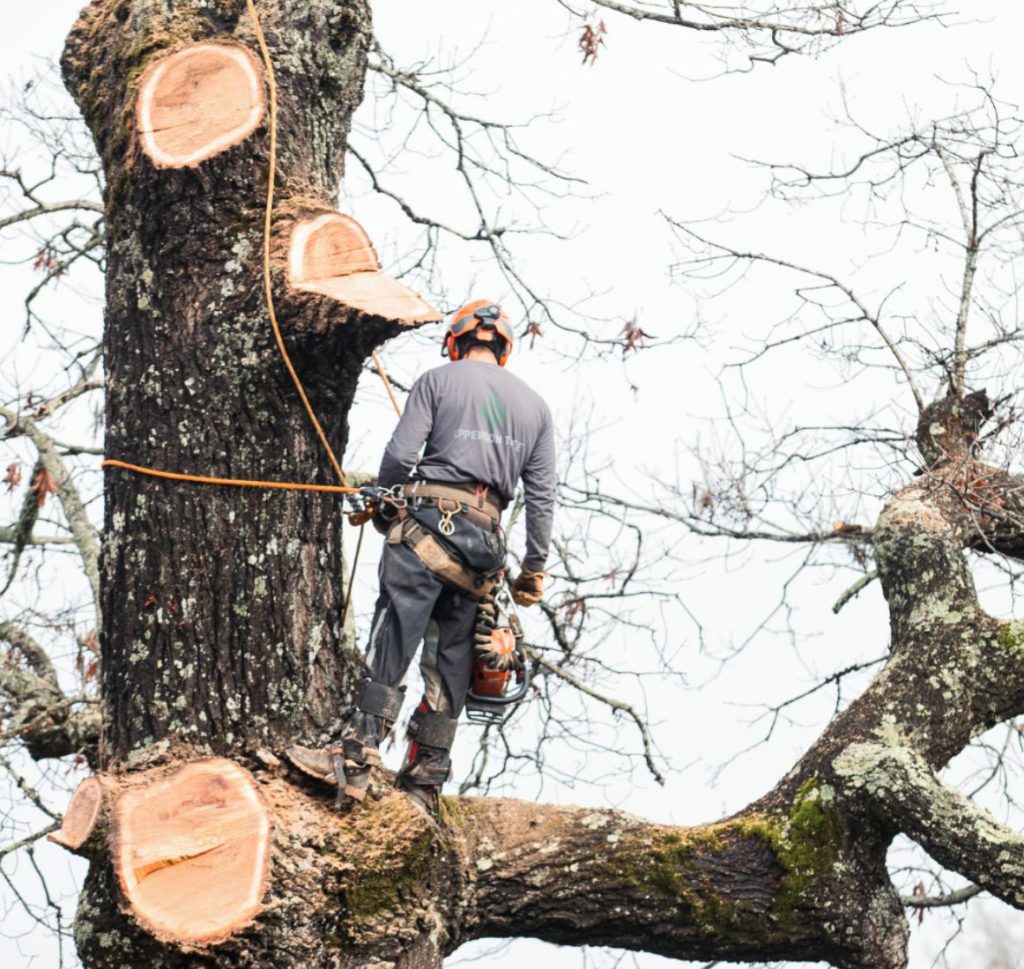
Professional crane-assisted removal typically involves several important stages.
Site Assessment: The crew evaluates the tree’s size, structural condition, surrounding obstacles, and accessibility.
Equipment Planning: Professionals determine whether a crane can safely access and operate from the property, including assessing ground conditions and overhead hazards.
Controlled Removal: Tree sections are secured, cut, lifted, and transported to a designated landing area following a coordinated removal plan.
Debris Cleanup: Once the tree is removed, the crew processes branches and logs and clears the work area.
Homeowners may also consider stump grinding services to remove the remaining stump and prepare the area for future landscaping.
Is Crane-Assisted Tree Removal More Expensive?
Crane-assisted removal may involve additional equipment and operating costs compared with conventional methods.
However, the final price depends on several factors:
- Tree height, diameter, and overall condition
- Distance between the tree and nearby structures
- Property accessibility and terrain
- Crane size and positioning requirements
- Complexity of the removal and cleanup process
In some situations, crane assistance can reduce labor time and make an otherwise difficult removal more efficient.
A professional on-site assessment is the best way to determine the appropriate method and estimated cost.
Trust Epperson Tree Service for Complex Tree Removal in Western NC
Removing large trees from tight mountain lots requires more than standard equipment. It demands experience, careful planning, and an understanding of Western North Carolina’s challenging terrain.
With more than 20 years of experience, Epperson Tree Service helps homeowners in Hendersonville and surrounding communities manage complex tree removal projects.
Whether you’re dealing with a hazardous tree near your home, a large tree on a steep hillside, or a property with limited access, our team can evaluate the situation and recommend the most appropriate removal approach.
Call Epperson Tree Service at (828) 606-4980 to request an estimate for crane-assisted tree removal in Western North Carolina.

