

Living in the mountains of Western North Carolina offers beautiful forests, scenic views, and peaceful surroundings. However, homes surrounded by dense vegetation can also face significant wildfire risks, particularly during dry, windy conditions.
For homeowners in Hendersonville, Asheville, and surrounding mountain communities, creating defensible space is one of the most effective ways to reduce wildfire exposure.
Defensible space is the strategically maintained area surrounding a home where vegetation, trees, and combustible materials are managed to slow the spread of fire and reduce potential ignition sources.
At Epperson Tree Service, we help homeowners manage trees and vegetation through professional tree removal, pruning, and property clearing services.
Why Wildfire Preparedness Matters in Western North Carolina
Although Western North Carolina is known for its green forests and abundant rainfall, wildfires remain a serious concern.
Dry leaves, fallen branches, dense undergrowth, and dead trees can provide fuel for fires. Strong winds can carry burning embers considerable distances, allowing fires to threaten homes even when flames are not immediately nearby.
Storm damage can increase these risks. Following Hurricane Helene, large amounts of fallen timber and damaged vegetation remained in portions of Western North Carolina, contributing to concerns about accumulated wildfire fuel.
Properties located along forested mountain slopes may face additional challenges because steep terrain can influence fire behavior and complicate emergency access.
Proper vegetation management helps reduce these hazards while preserving the natural beauty of mountain properties.
Understanding the Three Defensible Space Zones
Wildfire prevention professionals commonly divide the area surrounding a home into three zones.
Each zone requires different maintenance strategies.
Zone 1: Immediate Zone (0–5 Feet)
The first five feet surrounding your home are especially important because airborne embers can ignite combustible materials near exterior walls.
Homeowners should:
- Remove dry leaves and pine needles from foundations, roofs, and gutters.
- Replace combustible mulch with gravel or other noncombustible materials.
- Keep firewood, lumber, and other flammable items away from the house.
- Remove vegetation directly against exterior walls.
- Keep decks, porches, and nearby outdoor spaces clear of debris.
Maintaining this area can significantly reduce opportunities for ember ignition.
Zone 2: Intermediate Zone (5–30 Feet)
The intermediate zone focuses on reducing vegetation density and preventing fires from spreading rapidly toward structures.
Important maintenance activities include:
- Removing dead branches and unhealthy trees.
- Maintaining adequate spacing between trees and shrubs.
- Keeping grass short and vegetation healthy.
- Trimming branches that extend over roofs and decks.
- Removing accumulations of fallen leaves and woody debris.
Professional tree pruning services can help homeowners maintain appropriate branch clearance and reduce hazardous vegetation.
Zone 3: Extended Zone (30–100 Feet)
The extended zone helps reduce the amount and continuity of combustible vegetation surrounding a property.
Rather than completely clearing the forest, the goal is to manage tree density and eliminate excessive fuel accumulation.
Recommended activities include thinning overcrowded trees, removing dead vegetation, and maintaining separation between dense shrubs and lower tree branches.
On steep mountain slopes, defensible space may need to extend farther depending on site conditions and recommendations from local fire professionals.
Epperson Tree Service provides tree removal and trimming to help property owners manage overgrown or hazardous trees.
How Tree Pruning Helps Reduce Wildfire Risk
Proper tree maintenance is an essential part of wildfire preparedness.
One important consideration is reducing ladder fuels vegetation that allows a surface fire to climb into the upper canopy of trees.
Dense shrubs, low-hanging branches, and small trees growing beneath larger trees can create pathways for flames.
Strategic pruning helps create vertical separation between vegetation layers.
For appropriate mature trees, wildfire prevention guidance commonly recommends pruning lower branches to approximately six to ten feet above ground level, while preserving sufficient healthy canopy.
Homeowners should avoid excessive pruning or removing too much live foliage, as improper techniques can weaken trees.
Professional tree and shrub health services can help identify suitable maintenance practices.
Removing Hazardous Trees and Excess Vegetation
Dead, dying, and structurally compromised trees can increase wildfire fuel loads and create additional property hazards.
Trees affected by insect infestations, disease, or storm damage may contain significant dead material.
Removing hazardous trees can also improve accessibility for property maintenance and emergency response.
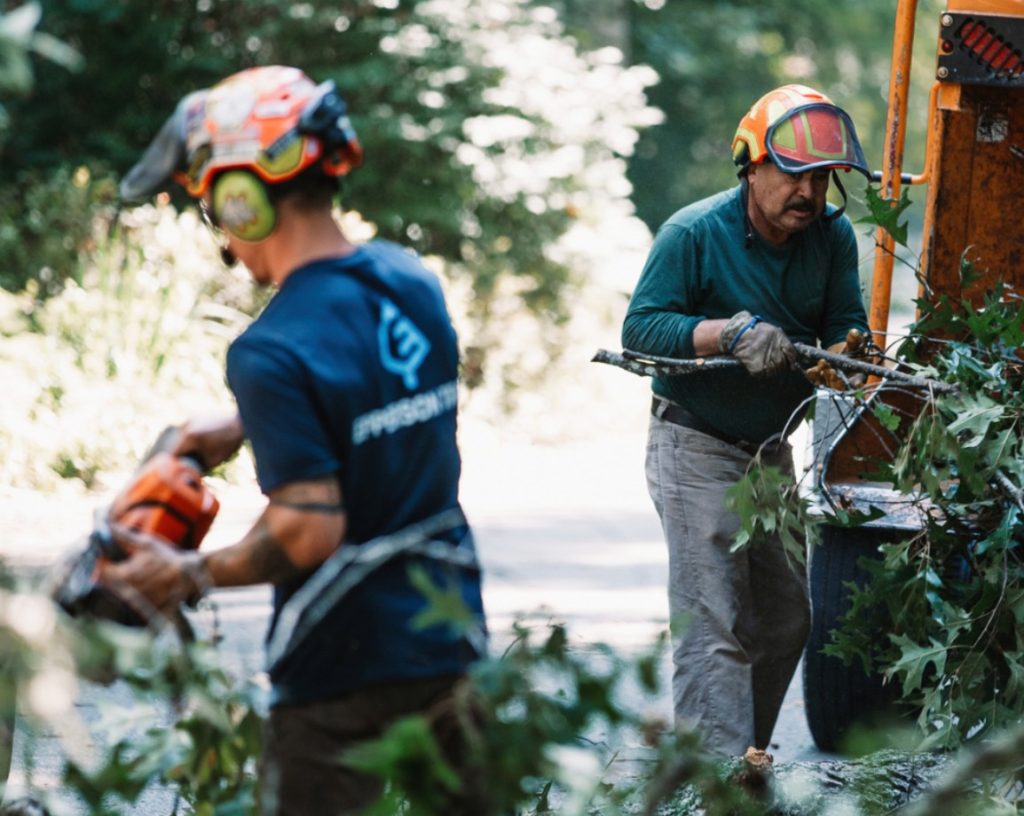
For wooded mountain properties, professional lot clearing and tree removal services can help reduce excessive vegetation without unnecessarily stripping the landscape.
When tree removal involves steep slopes or difficult access, crane services may provide a controlled method of handling large sections.
Protecting Driveways and Emergency Access Routes
Emergency access is another important consideration for mountain homeowners.
Narrow driveways, overhanging branches, and dense roadside vegetation can make it difficult for firefighting vehicles to reach remote properties.
Homeowners should maintain clear access routes and ensure that branches do not obstruct emergency vehicles.
Professional grading and excavating services may also support certain driveway or property access improvements when appropriate.
Any excavation or substantial vegetation removal on steep slopes should account for drainage, erosion, and applicable regulations.
When Should You Create Defensible Space?
Wildfire preparedness should be an ongoing responsibility rather than a last-minute project.
Fall and winter are useful times to inspect trees, remove accumulated debris, and identify areas requiring maintenance.
Before spring wildfire season, homeowners should reassess their properties and address new hazards caused by winter storms.
Regular maintenance throughout the year helps keep defensible space effective.
Protect Your Mountain Home With Epperson Tree Service
Creating defensible space doesn’t mean eliminating every tree surrounding your home. It means managing vegetation thoughtfully to reduce wildfire fuel and improve overall property safety.
With more than 20 years of experience, Epperson Tree Service provides professional tree care solutions throughout Hendersonville, Asheville, and surrounding Western North Carolina communities.
Whether your property needs strategic pruning, hazardous tree removal, or vegetation management, our team can help evaluate your landscape and recommend appropriate tree care services.
Contact Epperson Tree Service at (828) 606-4980 to schedule a tree assessment and take the next step toward a safer mountain property.

