
Pruning can be one of the best things you do for the trees on your property when it is done correctly. Removing dead, damaged, or poorly positioned branches can improve a tree’s structure, appearance, and overall condition. Improper pruning, however, can cause unnecessary stress and create problems that may last for years.
For homeowners in Hendersonville and throughout Western North Carolina, knowing what not to do is just as important as knowing when a tree needs attention.
Before you grab a saw and start cutting, consider these common tree pruning mistakes and how you can avoid them.
1. Removing Too Much of the Canopy at Once
One of the most common mistakes homeowners make is assuming that more pruning is always better.
A tree relies on its leaves to produce energy through photosynthesis. Removing a significant portion of the living canopy at one time can place unnecessary stress on the tree and affect its ability to recover.
Heavy pruning may also expose previously shaded branches and bark to increased sunlight.
The goal should generally be selective pruning rather than simply removing as many branches as possible.
Professional tree pruning focuses on removing appropriate branches while maintaining the tree’s natural structure and sufficient healthy foliage.
2. Topping a Tree
Tree topping involves cutting large branches or the upper portion of a tree back to stubs, often in an attempt to reduce its overall height.
While the tree may initially look smaller, topping can create long-term problems.
The tree may respond by producing numerous fast-growing shoots around the cuts. These new shoots may not have the same structural attachment as the original branches and can create additional maintenance concerns as they grow.
Large cuts can also expose more wood and leave the tree with a dramatically altered canopy.
If a tree has become too large for its location, simply cutting off the top is generally not a good long-term solution. A professional assessment can help determine whether selective pruning or another approach is more appropriate.
3. Making Cuts in the Wrong Place
Where you make a pruning cut matters.
Cutting too close to the trunk can damage tissues around the branch attachment that are involved in the tree’s natural response to injury. On the other hand, leaving excessively long branch stubs can also interfere with the tree’s ability to close over the wound.
Proper cuts require an understanding of branch structure and where the branch connects to the trunk or larger limb.
This becomes particularly important when removing larger branches, where poor cuts can cause bark to tear down the trunk.
4. Pruning at the Wrong Time
There is no single pruning season that is ideal for every tree and every situation.
The appropriate timing can depend on the tree species, its condition, the reason for pruning, and whether insects or diseases are active.
Dead or hazardous branches may need to be addressed when they create an immediate safety concern, regardless of the season. Other pruning may be better scheduled during specific periods of the year.
If you’re unsure when a particular tree should be pruned, an evaluation through professional tree and shrub health services can help determine what care is appropriate.
5. Using Dull or Dirty Tools
Pruning isn’t only about deciding which branch to remove. The condition of your equipment matters as well.
Dull tools can create rough, uneven cuts instead of clean ones. They can also make the job more difficult and encourage homeowners to twist or tear branches rather than cutting them properly.
Tools should be sharp and appropriate for the size of the branch being removed.
Cleaning pruning equipment is also important, particularly when working around trees or shrubs that may be affected by certain diseases. Proper tool sanitation can reduce the possibility of carrying pathogens from one plant to another.
6. Ignoring the Tree’s Natural Structure
Every tree has a natural growth pattern.
Trying to force a mature oak, maple, pine, or other tree into an unnatural shape can lead to excessive pruning and repeated maintenance.
Instead, pruning should generally work with the existing structure of the tree. The objective may be to remove dead wood, address crossing branches, improve clearance, or correct specific structural concerns without unnecessarily changing the entire canopy.
Some structural problems cannot be solved by pruning alone. Mature trees with heavy limbs or weak branch unions may sometimes benefit from professional tree cabling to provide additional support.
7. Trying to Prune Large or Dangerous Branches Yourself
Small branches that can be safely reached from the ground are very different from large limbs high in a mature tree.
Branches can be much heavier than they appear, and their movement after a cut is not always easy to predict. Limbs under tension may swing, split, or fall unexpectedly.
Attempting to use a chainsaw while standing on a ladder adds another significant risk.
You should also avoid any DIY tree work near utility lines.
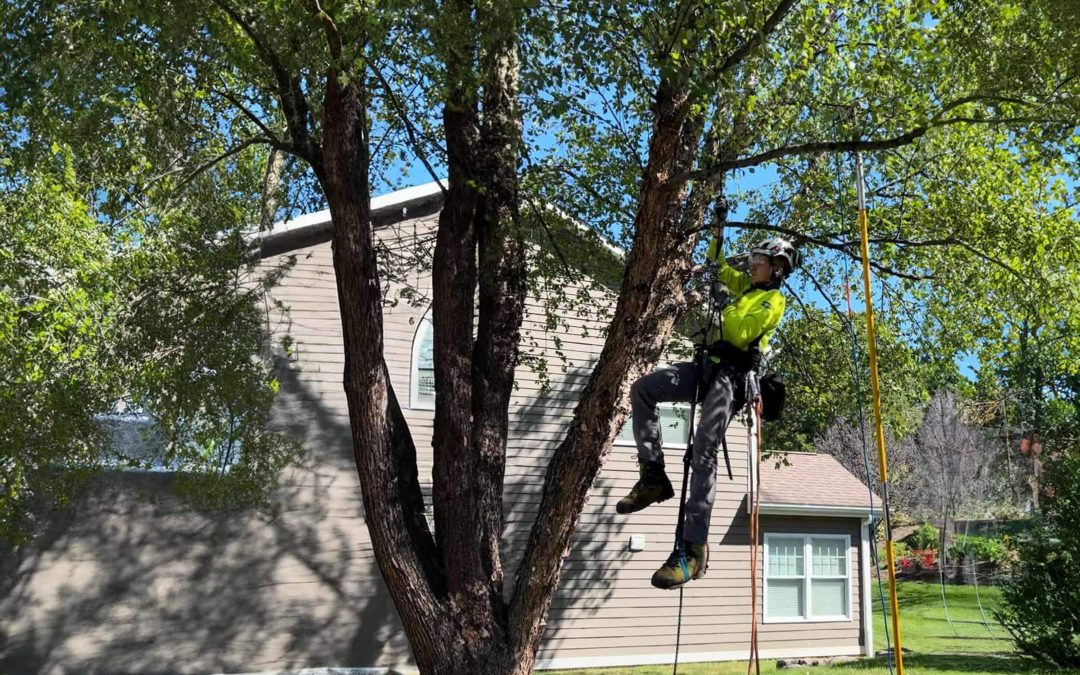
If pruning requires climbing, specialized rigging, a chainsaw at height, or removal of large branches over a home or other structure, professional assistance is generally the safer choice.

8. Waiting Until a Branch Breaks
Pruning is often treated as a reaction to a problem rather than preventive maintenance.
Homeowners may ignore a dead or damaged branch until a storm finally brings it down.
Periodically checking your trees can help you notice dead branches, cracks, crossing limbs, or unusual canopy changes before they become more significant.
This is especially important for trees located near homes, driveways, garages, sidewalks, and outdoor living areas.
If a tree has already suffered substantial damage, professional tree removal and trimming can help determine whether damaged sections can be safely removed or whether the entire tree has become structurally compromised.
How Often Should Trees Be Pruned?
There is no universal pruning schedule that applies to every tree.
Young trees may benefit from structural pruning as they develop, while established trees may primarily need occasional removal of dead, damaged, or problematic branches.
Tree species, age, location, condition, and growth rate all influence how frequently pruning may be necessary.
Rather than pruning simply because a certain number of years have passed, pay attention to the condition and structure of each tree.
Get Professional Tree Pruning in Hendersonville, NC
Proper pruning is about much more than cutting branches. Every cut changes the tree, which makes understanding what to remove and what to leave alone important for its long-term condition.
Avoiding excessive pruning, topping, poor cuts, unsafe DIY work, and other common mistakes can help protect the mature trees around your property.
Epperson Tree Service provides professional tree pruning and tree care throughout Hendersonville and Western North Carolina. Whether you need dead branches removed, structural concerns evaluated, or routine maintenance for mature trees, our experienced team can help determine the appropriate approach.
Contact Epperson Tree Service today to schedule professional tree pruning in Hendersonville, NC.

