
Oak and pine trees are a major part of the landscape throughout Hendersonville and Western North Carolina. While established trees can live for decades, they are still vulnerable to diseases, insects, environmental stress, and other problems that can gradually affect their health.
The challenge for homeowners is recognizing when a change is normal and when it may indicate something more serious.
Discolored needles, dead branches, unusual spots on leaves, peeling bark, or a thinning canopy can all be warning signs. Identifying the underlying cause early can give you more options for protecting the tree and preventing problems from becoming worse.
Here are some of the most common signs that your oak or pine tree may need professional attention.
Signs Your Oak Tree May Be Diseased
Oak trees can experience numerous health problems, and symptoms can vary depending on the specific disease, pest, or environmental condition.
1. Leaves Are Turning Brown or Yellow Too Early
Some leaf discoloration is a normal part of the changing seasons. However, if an oak begins developing brown or yellow leaves well before fall, something may be affecting its health.
Pay attention to whether discoloration is happening throughout the entire canopy or only on individual branches.
Unusual leaf color can have several causes, including disease, drought stress, root problems, insects, or nutrient deficiencies. Because different issues can produce similar symptoms, leaf color alone isn’t enough to diagnose the problem.
2. You Notice Unusual Spots on the Leaves
Dark, brown, yellow, or irregular spots on oak leaves can sometimes indicate fungal or bacterial problems.
You may also notice leaves curling, becoming distorted, or dropping earlier than expected.
Some leaf diseases are primarily cosmetic, while others can contribute to more serious decline, particularly when a tree is already under stress.
Professional insect and disease control can help identify what is affecting the tree and determine whether treatment is appropriate.
3. Branches Are Dying
A few small dead twigs aren’t necessarily a major concern. However, widespread branch dieback or larger dead sections of the canopy deserve attention.
If one side of the tree begins thinning significantly or large branches stop producing leaves, the problem may extend beyond routine seasonal changes.
Dead branches can also become a safety concern because weakened wood may eventually fall.
Professional tree pruning can remove dead or damaged branches when appropriate while allowing the rest of the tree to be evaluated.
Signs Your Pine Tree May Be Diseased
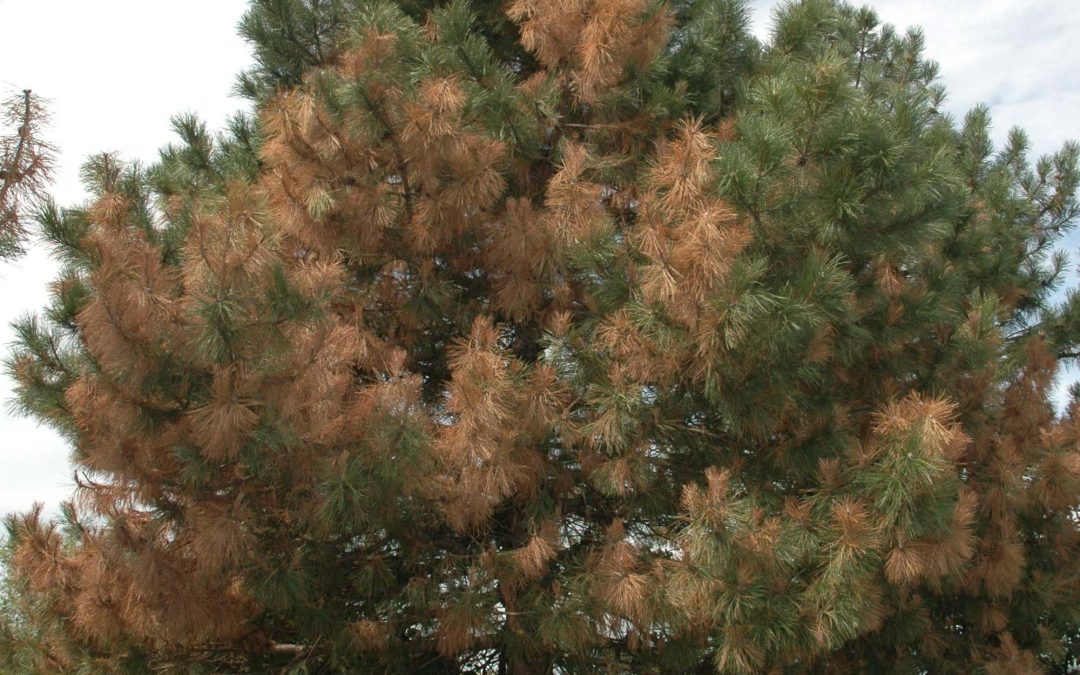
Pine trees naturally shed some older needles, so seeing brown needles doesn’t automatically mean your pine is dying.
The location and extent of the discoloration matter.
4. Needles Are Browning Throughout the Tree
Healthy pines periodically lose older needles closer to the interior of the canopy. This can be completely normal.
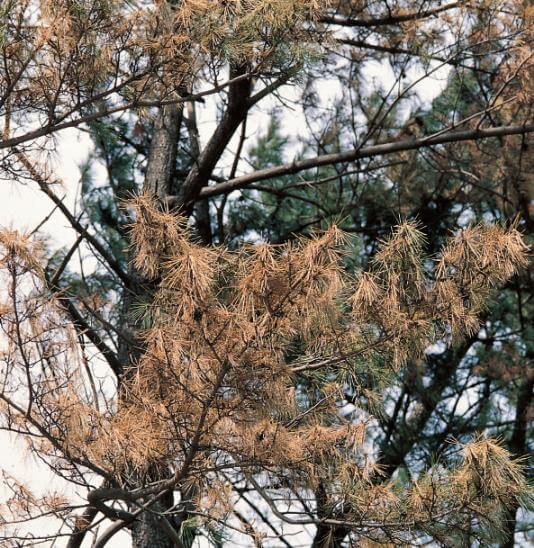
More concerning patterns include widespread browning, discoloration at branch tips, entire sections of the canopy changing color, or unusually rapid needle loss.
Disease, insect activity, root damage, drought, and other environmental stresses can all cause similar symptoms.
If the browning appears suddenly or continues spreading, it may be time to have the tree evaluated.
5. You See Sap or Resin on the Trunk
Pines naturally produce resin, particularly when injured, so small amounts aren’t necessarily alarming.
However, excessive resin, unusual masses of pitch, holes in the bark, or sawdust-like material around the trunk can sometimes indicate insect activity or another underlying problem.
Look for patterns rather than a single isolated spot.
If you notice increasing bark damage accompanied by canopy thinning or needle discoloration, professional assessment can help determine whether insects, disease, or physical damage are responsible.
Other Warning Signs to Watch for in Both Oaks and Pines
Some symptoms aren’t specific to one tree species.
Homeowners should pay attention to:
- Mushrooms or fungal growth around the trunk or roots
- Cracks or cavities in the trunk
- Peeling or unusually loose bark
- Significant canopy thinning
- Dead branches
- Sudden leaning
- Exposed or damaged roots
- Unusual insect activity
- Reduced new growth
These signs don’t automatically mean the tree needs to be removed. They do, however, indicate that further evaluation may be worthwhile.
Epperson Tree Service provides professional tree and shrub health services to help identify health problems affecting trees throughout Hendersonville and Western North Carolina.
Could the Problem Be Nutritional Rather Than Disease?
Not every unhealthy-looking tree has a disease.
Poor soil conditions or nutrient deficiencies can sometimes contribute to weak growth, unusual leaf color, or reduced foliage.
Trees growing in residential landscapes may face very different conditions than trees growing naturally in a forest. Construction, soil compaction, altered drainage, and changes to the surrounding landscape can all affect root health and nutrient availability.
When appropriate, professional tree fertilization can address specific nutritional needs and support healthy tree growth.
Simply applying fertilizer without identifying the problem, however, isn’t always the right solution. Proper evaluation should come first.
Why Early Detection Matters
Tree health problems are often easier to address when they’re identified early.
Waiting until a large portion of the canopy has died or the tree has become structurally compromised can limit the available options.
Regularly looking at your trees makes it easier to recognize changes. You don’t need to inspect every leaf. Instead, become familiar with what the tree normally looks like throughout the seasons.
If something changes significantly such as sudden discoloration, rapid needle loss, widespread branch death, or unusual bark damage — consider having the tree evaluated.
When Does a Diseased Tree Need to Be Removed?
Disease does not automatically mean removal.
Depending on the underlying problem and how advanced it is, pruning, pest management, improved tree care, or other treatments may be possible.
However, if disease or decay has significantly compromised the tree’s structure, removal may eventually become the safest option, particularly when the tree is located close to a home, driveway, road, or other frequently used area.
A professional evaluation can help determine whether treatment is reasonable or whether tree removal and trimming should be considered.
Protect Your Oak and Pine Trees in Hendersonville, NC
Changes in leaves, needles, branches, bark, or overall canopy density can provide important clues about the health of your trees. The key is identifying what is causing those changes rather than assuming every brown leaf or needle indicates disease.
Epperson Tree Service provides professional tree health care throughout Hendersonville and Western North Carolina. From diagnosing insect and disease problems to pruning, fertilization, and ongoing tree care, our team can help determine what your oak or pine tree needs.
If you’re concerned about the health of a tree on your property, contact Epperson Tree Service today to schedule a professional evaluation.

