
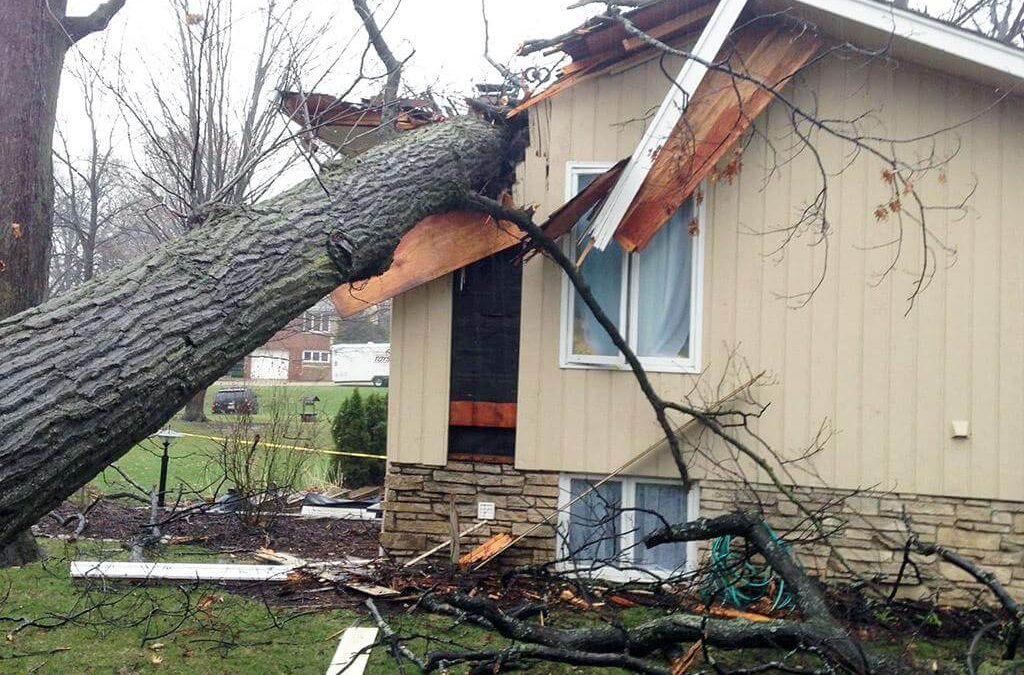
Spring brings warmer temperatures and new growth to Western North Carolina, but it can also bring severe thunderstorms, high winds, and periods of heavy rain. For homeowners, these conditions can expose weaknesses in trees that may have gone unnoticed throughout the winter.
A damaged limb hanging over your roof, a weakened trunk, or unstable roots in saturated soil can quickly become a serious problem when a strong storm arrives.
Preparing your trees before spring storms become more frequent can help reduce the risk of falling branches, property damage, and emergency tree removal. Here are some of the most important steps homeowners in Hendersonville and throughout Western NC can take.
1. Inspect Your Trees Before Storm Season
Start by taking a walk around your property and looking for obvious signs of tree damage or instability.
Pay particular attention to trees near your home, driveway, garage, utility lines, and outdoor living areas.
Potential warning signs include:
- Dead or hanging branches
- Cracks or splits in major limbs
- Cavities in the trunk
- Peeling or damaged bark
- Significant leaning
- Mushrooms or fungal growth around the base
- Exposed or damaged roots
- Sections of the canopy with little or no new growth
Not every visible defect means a tree is dangerous. However, unusual changes can indicate structural or health problems that deserve a closer look.
Professional tree and shrub health services can help identify problems that may not be obvious from a visual inspection alone.
2. Prune Dead and Weak Branches
One of the most effective ways to prepare trees for severe weather is to address weak, damaged, and dead branches before a storm arrives.
High winds place significant stress on the canopy. A branch that remains attached during normal weather may break when subjected to strong gusts.
Dead limbs are particularly concerning because they no longer have the flexibility and structural integrity of healthy wood.
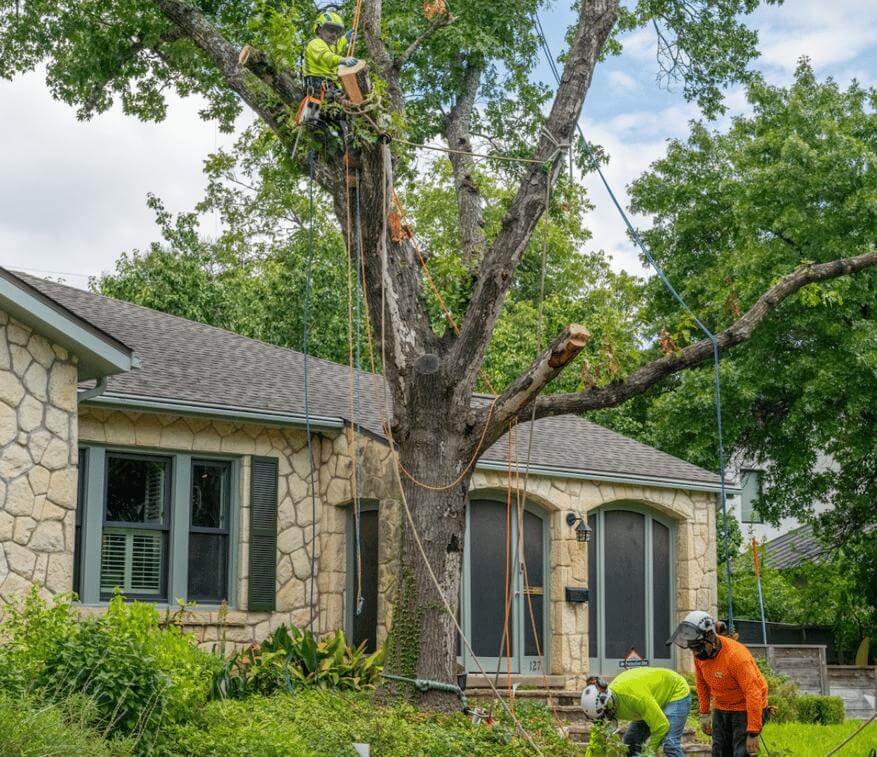
Professional tree pruning can remove problematic branches while preserving healthy portions of the canopy. Proper pruning may also improve tree structure and reduce unnecessary weight in areas where branches are overcrowded or poorly positioned.
However, excessive pruning can create its own problems. Removing too much of the canopy or improperly cutting large branches can stress the tree, which is why major pruning is generally best handled by experienced professionals.
3. Consider Cabling for Structurally Weak Trees
Some mature trees develop multiple trunks, heavy limbs, or structural weaknesses that don’t necessarily require complete removal.
In certain situations, additional support may help reduce stress on vulnerable sections of a tree.
Professional tree cabling uses support systems designed to reinforce weak branches or stems. Cabling may be appropriate for certain mature trees with structural defects that could otherwise make them more susceptible to storm damage.
Whether cabling is suitable depends on the individual tree. An evaluation is necessary to determine the severity of the structural problem and whether additional support is a reasonable solution.
4. Pay Attention to the Ground Around Your Trees
Wind isn’t the only concern during a spring storm.
Heavy rain can saturate the soil surrounding a tree’s root system. When the ground becomes extremely wet, it may provide less support, particularly when combined with strong winds pushing against a large canopy.
After prolonged periods of rain, watch for changes around the base of large trees.
Newly exposed roots, cracks or lifting in the surrounding soil, or a tree that appears to be leaning more than it previously did can indicate a potentially serious problem.
Avoid driving or operating heavy equipment over the root zones of mature trees whenever possible. Soil compaction and root damage can negatively affect tree health and stability over time.
5. Don’t Ignore Dead or Severely Damaged Trees
A completely dead or severely compromised tree may pose a greater risk during severe weather.
Dead trees gradually lose structural strength as wood deteriorates. Large limbs can break, and eventually the trunk itself may become unstable.
If a dead tree is located close to your house, driveway, neighboring property, or another frequently used area, having it evaluated before storm season can help you understand the potential risk.
When removal is necessary, professional tree removal and trimming allows the tree to be taken down in a controlled manner rather than waiting for severe weather to determine where it falls.
6. Look Up Before the Storm Arrives
Many homeowners pay attention to the trunk and lower branches but overlook the upper canopy.
Look for broken limbs that have become caught in neighboring branches. Sometimes called hanging or suspended limbs, these can remain overhead after previous storms and fall later without much warning.
You should also look for branches extending over your roof, vehicles, driveway, patio, or other frequently occupied areas.
Do not attempt to remove large hanging branches yourself. Tree work at height can be dangerous, particularly when damaged branches are under tension or positioned unpredictably.

What Should You Do After a Severe Storm?
Once the storm has passed, inspect your property from a safe distance.
If you see fallen trees, large broken limbs, newly leaning trees, or substantial trunk damage, avoid standing or parking underneath the affected area.
Never approach a tree or branch that has fallen onto a utility line. Treat any downed line as potentially energized and contact the appropriate utility provider.
For tree-related hazards, Epperson Tree Service provides 24/7 emergency tree services for fallen and storm-damaged trees throughout the Hendersonville area.
Prepare Your Hendersonville Trees Before Spring Storms
The best time to address a potentially hazardous tree is before high winds and heavy rain put it to the test.
Routine inspections, appropriate pruning, structural support when necessary, and early attention to dead or damaged trees can all play a role in reducing storm-related risks around your property.
Epperson Tree Service provides professional tree care throughout Hendersonville and Western North Carolina. From preventive pruning and tree cabling to hazardous tree removal and 24/7 emergency response, our team can help you prepare your property for unpredictable spring weather.
Contact Epperson Tree Service today to schedule professional tree care and get your property ready for spring storm season.

