
A mature shade tree can completely change a yard, providing a cooler place to relax during summer, adding natural beauty, and creating a more comfortable outdoor space. The problem is that many trees can take decades to reach a substantial size.
Fortunately, homeowners don’t always have to wait that long.
Several fast-growing tree species can thrive in the Hendersonville area and begin providing meaningful shade relatively quickly. However, growth rate shouldn’t be your only consideration. Western North Carolina’s climate, available space, soil conditions, mature tree size, and long-term maintenance requirements should all influence your decision.
If you’re looking to add shade to your property, here are five fast-growing trees worth considering for a Hendersonville, NC yard.
1. Tulip Poplar
The tulip poplar (Liriodendron tulipifera) is one of the most recognizable native trees in North Carolina and an excellent option when you have plenty of room.
Tulip poplars can grow approximately 2 feet or more per year under favorable conditions. Over time, they develop into very large trees with tall trunks and broad canopies.
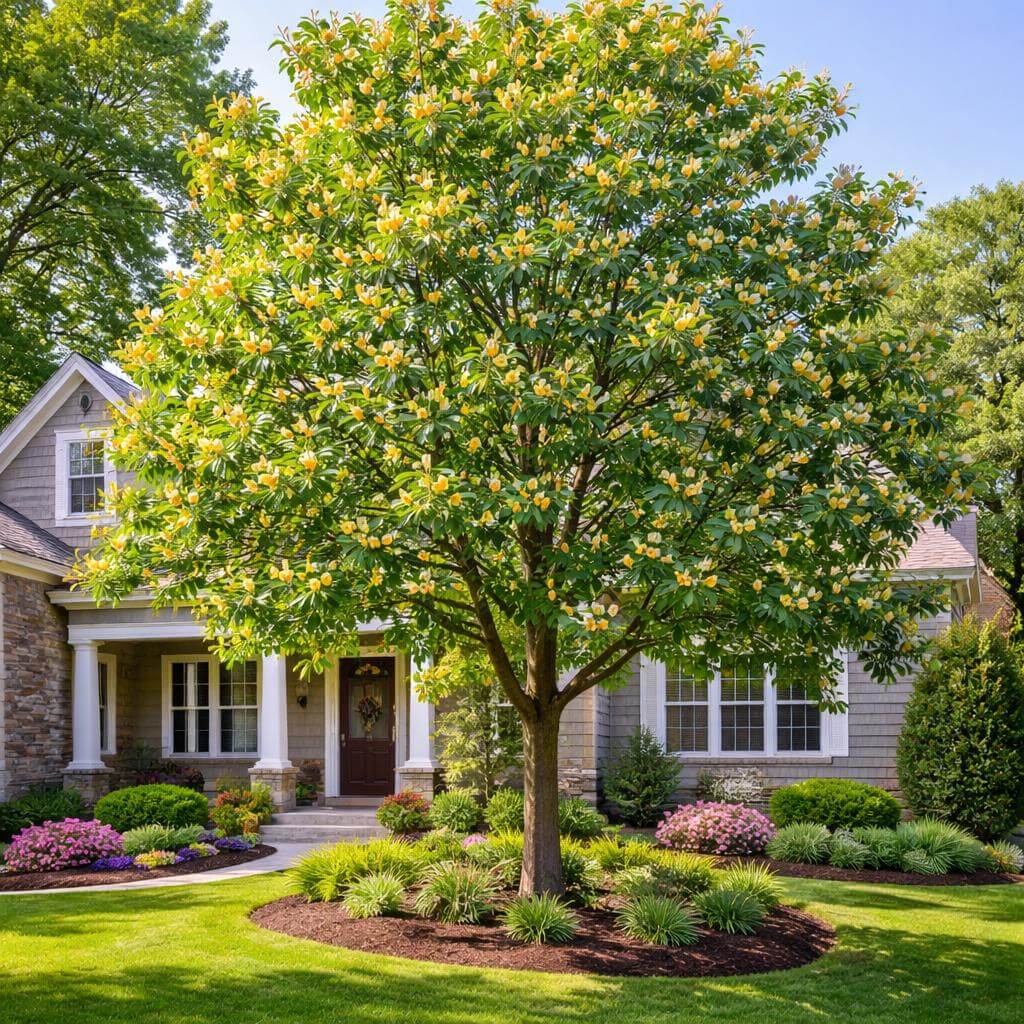
Their distinctive leaves and yellow-green, tulip-shaped flowers also make them an attractive addition to larger properties.
Because these trees can become extremely tall, placement is important. Avoid planting them too close to homes, utility lines, driveways, or other structures.
Regular tree pruning while the tree is developing can help encourage healthy structure and address problematic branches before the tree reaches its mature size.
2. Red Maple
Red maple (Acer rubrum) is another native tree that combines relatively fast growth with excellent ornamental value.
Depending on growing conditions, red maples can grow around 1 to 2 feet per year and eventually develop a broad canopy capable of providing substantial shade.
One of their biggest advantages is their seasonal appearance. While the foliage is green throughout the growing season, many red maples develop vibrant red, orange, or yellow color in the fall.
Red maples can adapt to a variety of conditions, but choosing an appropriate planting location is still essential. Give the tree enough room to develop without crowding buildings or other mature trees.
3. River Birch
If your property has a moist section where other trees struggle, river birch (Betula nigra) may be worth considering.
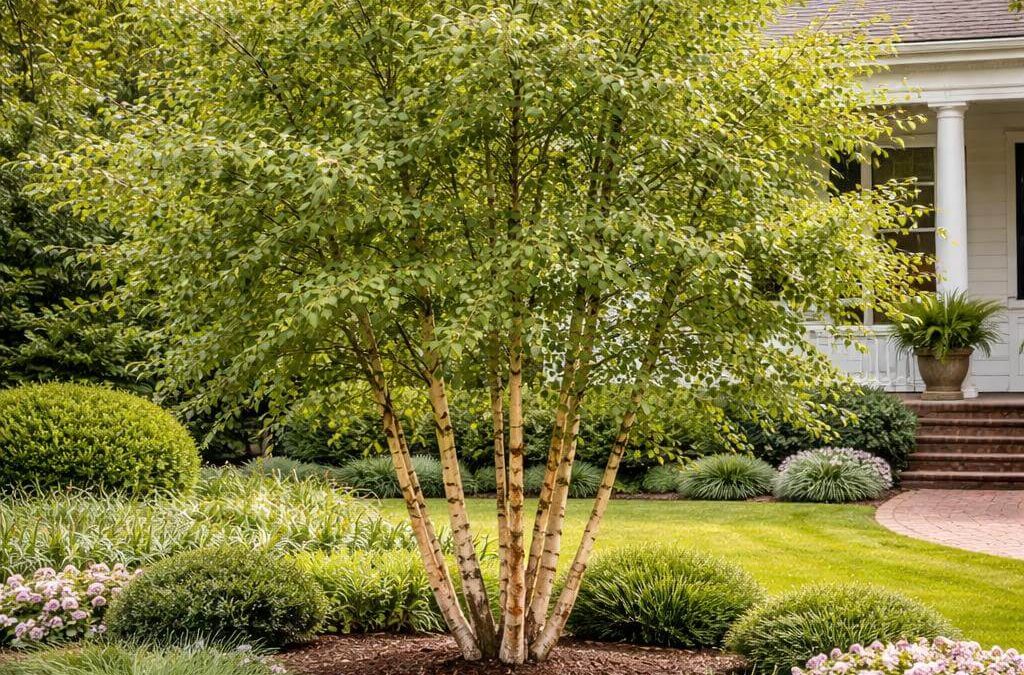
River birches are native to the eastern United States and are known for relatively rapid growth. Under favorable conditions, they may grow approximately 1.5 to 2 feet or more per year.
They are especially recognizable because of their attractive peeling bark, which provides visual interest even after the leaves have fallen.
River birches generally perform best where they have access to consistent moisture. However, like any tree, their long-term performance depends on proper placement and soil conditions.
Epperson Tree Service’s tree and shrub health services can help property owners identify health issues and maintain established trees and shrubs throughout their landscapes.
4. Pin Oak
For homeowners looking for a classic shade tree, pin oak (Quercus palustris) is another option to consider.
Pin oaks can grow relatively quickly when planted in suitable conditions and eventually develop into large trees with dense canopies.
As with other large shade trees, the most important consideration is space. A tree that looks small when planted can eventually occupy a substantial portion of the yard.
Before planting, think about the tree’s mature height and canopy spread rather than just how it looks at the nursery.
Also consider nearby sidewalks, driveways, foundations, utility lines, and other trees. Choosing the right location now can prevent expensive problems decades later.
5. Green Giant Arborvitae
Not every homeowner looking for fast growth necessarily needs a traditional shade tree.
Green Giant arborvitae (Thuja standishii × plicata ‘Green Giant’) is an evergreen that can grow approximately 3 feet per year under favorable conditions, making it a popular choice for quickly establishing privacy and screening.
Rather than creating a wide overhead shade canopy like a maple or oak, Green Giants form tall, dense evergreen screens.
They can be useful along property boundaries, around outdoor living spaces, or in areas where you want both greenery and additional privacy.
Proper spacing is extremely important. Planting them too close together may create problems as the trees mature.
Fast Growth Still Requires Proper Tree Care
Choosing a fast-growing tree doesn’t mean you can plant it and forget about it.
Young trees need the right conditions to establish healthy roots and develop strong structures. Soil quality, moisture, available sunlight, pruning, and nutrition can all influence how successfully a tree grows.
Professional tree fertilization may be recommended when soil conditions or nutrient deficiencies are affecting tree health. However, fertilization should be based on the needs of the tree rather than simply adding fertilizer in an attempt to force faster growth.
Fast-growing trees can also develop problems when structural issues aren’t addressed early. Regular inspections and appropriate pruning can help identify weak, crossing, damaged, or poorly positioned branches.
Watch for Insects and Tree Diseases
Rapid growth doesn’t make a tree immune to pests or disease.
Changes in leaf color, premature leaf drop, dead branches, holes in bark, unusual growth, or thinning sections of the canopy can all indicate a potential problem.
Early identification is important because some tree health problems become significantly harder to manage once they have spread.
Professional insect and disease control can help identify what is affecting a tree and determine whether treatment is appropriate.
Which Shade Tree Is Best for Your Hendersonville Property?
There isn’t one fast-growing tree that is right for every Western North Carolina yard.
If you have a large property and want a native tree capable of developing into an impressive canopy, a tulip poplar may be a good candidate. Red maples combine shade with attractive fall color, while river birches can work well in wetter areas. Pin oaks provide the classic appearance of a large shade tree, and Green Giant arborvitae can be useful when privacy is the primary goal.
Whatever species you choose, think beyond the first few years of growth. Consider how large the tree will eventually become and whether your property can accommodate it safely.
Epperson Tree Service provides professional tree care throughout Hendersonville and Western North Carolina. From pruning and fertilization to diagnosing insects and diseases, our team can help you maintain healthy trees as your landscape grows.
Contact Epperson Tree Service today for professional tree and shrub care in Hendersonville, NC.

