

Trees are one of the most valuable features of any property in Western North Carolina. They provide shade, improve curb appeal, support local wildlife, and contribute to the natural beauty that makes communities like Hendersonville so attractive. Unfortunately, many ash trees across the region are now under serious threat from a destructive invasive insect known as the Emerald Ash Borer.
Since its arrival in the United States, the Emerald Ash Borer has killed millions of ash trees and continues spreading across North Carolina. For homeowners, early detection and proper treatment are critical for protecting healthy trees and preventing dangerous tree failures.
At Epperson Tree Service, we help property owners identify signs of infestation, evaluate tree health, and determine the best course of action to preserve safety and protect the landscape.
What Is the Emerald Ash Borer?
The Emerald Ash Borer (EAB) is a small metallic green beetle native to Asia. Although the adult beetles themselves cause only minor damage, their larvae are highly destructive.
After laying eggs on the bark of ash trees, the larvae burrow beneath the surface and feed on the inner layers of the tree. This feeding disrupts the tree’s ability to transport water and nutrients, eventually causing decline and death.
Once infested, an untreated ash tree can die within just a few years.
Why Emerald Ash Borer Is a Serious Problem in North Carolina
Western North Carolina has many native ash species growing in residential neighborhoods, wooded lots, parks, and natural areas. Because the Emerald Ash Borer has very few natural predators in the United States, infestations can spread rapidly.
Dead or dying ash trees create serious risks, including:
- Falling limbs
- Structural instability
- Damage to homes and vehicles
- Increased wildfire fuel
- Hazards near driveways and roads
Ash trees weakened by EAB also become extremely brittle over time, making removal more dangerous and complicated if left untreated for too long.
How to Identify an Ash Tree
Before looking for Emerald Ash Borer symptoms, it helps to confirm whether you actually have an ash tree.
Ash trees commonly have:
- Opposite branching patterns
- Compound leaves with multiple leaflets
- Diamond-shaped bark ridges on mature trees
- Straight trunks with symmetrical crowns
Common ash species found in North Carolina include:
- White Ash
- Green Ash
- Carolina Ash
If you are unsure about the species, a professional tree inspection can help identify your trees accurately.
Signs of Emerald Ash Borer Infestation
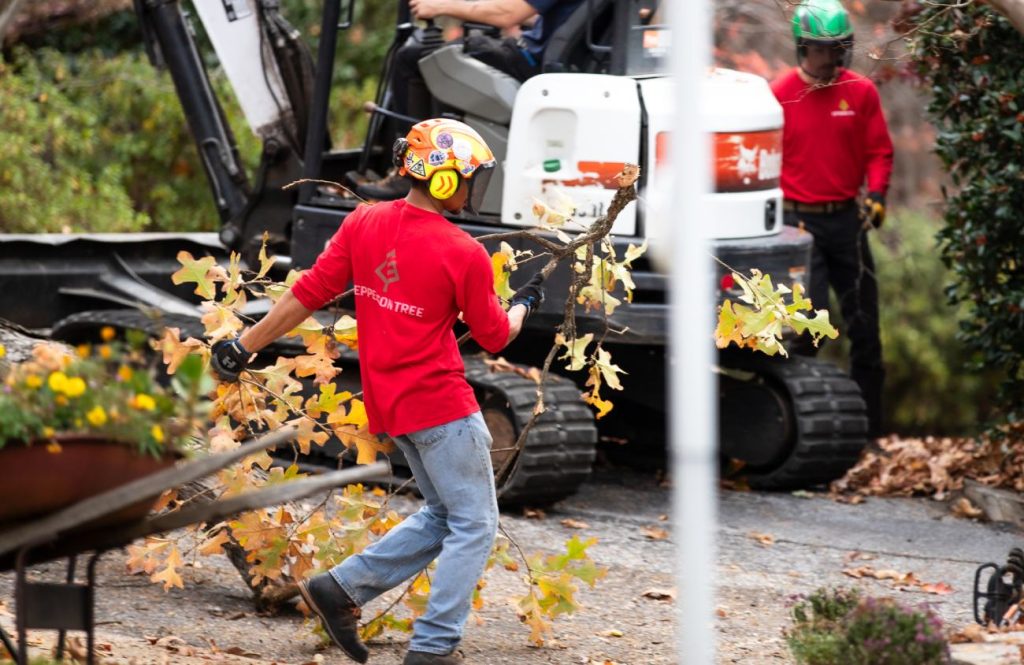
One of the biggest challenges with Emerald Ash Borer is that infestations often go unnoticed during the early stages. By the time symptoms become obvious, significant internal damage may already exist.
Here are some of the most common warning signs homeowners should watch for.
Thinning Canopy
One of the earliest symptoms is thinning foliage in the upper canopy. Branches may begin losing leaves while other nearby trees appear healthy.
As the infestation progresses, sections of the canopy may die back completely.
D-Shaped Exit Holes
Adult Emerald Ash Borers leave behind tiny D-shaped exit holes when they emerge from the tree.
These holes are usually about one-eighth of an inch wide and may be difficult to spot without close inspection.
Bark Splitting
As larvae tunnel beneath the bark, vertical cracks or splits may appear along the trunk or branches.
Sometimes homeowners can actually see the winding larval galleries beneath the bark surface.
Increased Woodpecker Activity
Woodpeckers feed heavily on Emerald Ash Borer larvae. If you suddenly notice large amounts of woodpecker activity on an ash tree, it could indicate infestation.
Pecking damage often creates lighter patches on the bark where birds have removed the outer surface searching for larvae.
Epicormic Sprouting
Infested trees may begin producing small shoots or sprouts from the trunk or lower branches as the tree attempts to survive.
This abnormal growth is a common stress response in declining ash trees.
Why Early Detection Matters
The earlier Emerald Ash Borer is identified, the better the chances of saving the tree.
Once more than 30 to 50 percent of the canopy has died, treatment success drops significantly. In advanced stages, removal is often the safest option.
Because EAB damage occurs internally first, professional inspections are often the best way to identify problems before severe decline begins.
Treatment Options for Emerald Ash Borer
Systemic Insecticide Treatments
For healthy or lightly infested trees, systemic insecticides can be highly effective when applied properly.
These treatments are typically administered through:
- Soil injections
- Trunk injections
- Basal bark applications
The insecticide moves throughout the tree’s vascular system, killing larvae as they feed beneath the bark.
Most treatments need to be repeated every one to three years depending on the product used and the severity of local infestations.
Monitoring and Preventive Care
Trees receiving treatment should continue to be monitored regularly for changes in health and structural condition.
Proper watering, mulching, and pruning can also help reduce stress and improve a tree’s ability to recover.
Tree Removal
In cases where infestation is severe or the tree has become hazardous, removal may be the safest solution.
Dead ash trees become brittle quickly, especially after standing for several years. Prompt removal helps reduce risks to nearby homes, structures, vehicles, and people.
Professional removal is especially important for large trees located near power lines or buildings.
Can an Infested Tree Be Saved?
Yes — but timing is critical.
Ash trees treated during the early stages of infestation often recover successfully and continue thriving for many years. However, once structural decline becomes severe, treatment may no longer be effective.
A professional arborist can evaluate:
- Canopy condition
- Structural integrity
- Extent of infestation
- Overall tree health
- Safety concerns
This assessment helps determine whether treatment or removal is the better option.
Preventing the Spread of Emerald Ash Borer
Homeowners can also help reduce the spread of Emerald Ash Borer throughout North Carolina.
Avoid Moving Firewood
Transporting firewood is one of the primary ways invasive insects spread to new areas. Never move untreated firewood long distances.
Monitor Trees Regularly
Inspect ash trees annually for signs of stress, dieback, or insect activity.
Schedule Professional Inspections
Routine tree evaluations can identify early symptoms before irreversible damage occurs.
Protecting Your Landscape for the Future
Ash trees are valuable parts of many Western North Carolina landscapes, and losing mature trees can significantly impact property appearance, shade coverage, and environmental health.
At Epperson Tree Service, we help homeowners throughout the region identify Emerald Ash Borer infestations early and develop safe, effective treatment plans. Whether your goal is preserving a healthy ash tree or safely removing a hazardous one, professional tree care can make all the difference.
Final Thoughts
Emerald Ash Borer is one of the most destructive tree pests in North America, and its impact continues growing across Western North Carolina. Early identification, prompt treatment, and regular monitoring are essential for protecting ash trees and reducing safety risks.
If you suspect your ash trees may be infested, don’t wait for the damage to worsen. A professional inspection can help determine the condition of the tree and the best path forward for protecting your property and landscape.

