
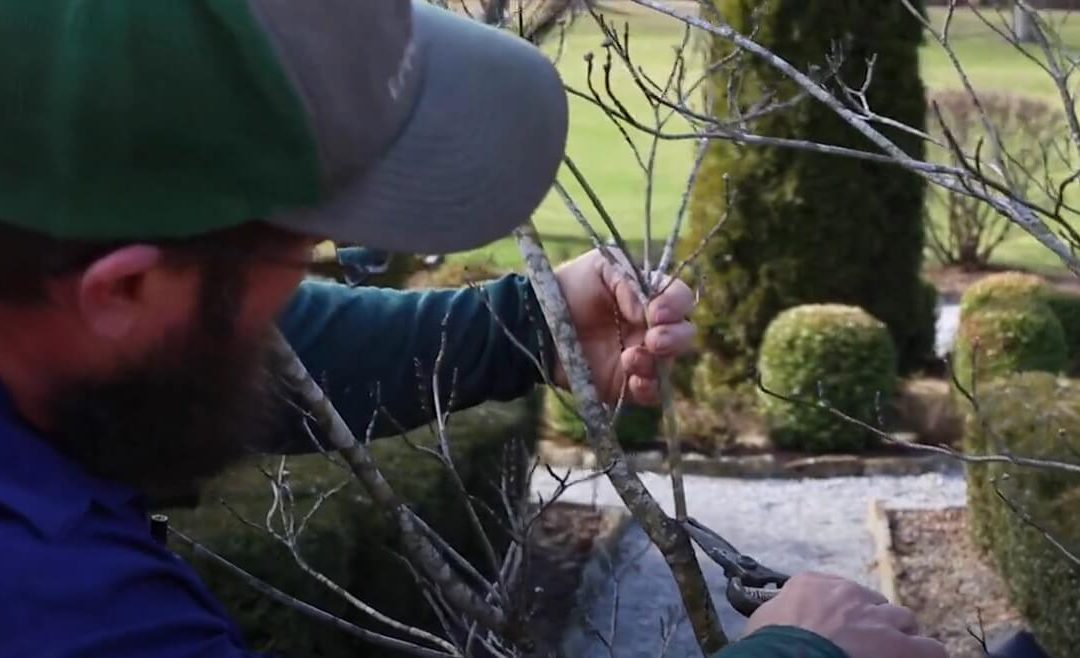
When a tree loses its leaves, stops producing new growth, or simply looks lifeless, it’s natural to wonder whether something is wrong. For homeowners in Hendersonville and throughout Western North Carolina, the answer isn’t always obvious. Your tree could be dead or declining, but it may also simply be dormant.
Dormancy is a normal part of the life cycle for many trees, particularly during the colder months. However, a tree that remains bare when surrounding trees begin growing again may need professional attention.
Knowing a few basic signs can help you determine whether your tree is dead or dormant and when it’s time to call Epperson Tree Service for a professional assessment.
What Does It Mean When a Tree Is Dormant?
Dormancy is essentially a tree’s resting period. As temperatures fall and daylight decreases, many deciduous trees slow their growth and shed their leaves to conserve resources.
During this period, a perfectly healthy tree can look dead. There may be no leaves, flowers, or visible new growth for months.
Once temperatures rise and growing conditions improve, a healthy dormant tree should gradually become active again. Buds swell, leaves emerge, and new shoots begin developing.
The challenge is that unhealthy and dead trees can look very similar during winter. That’s why homeowners should look for several signs rather than relying on the absence of leaves alone.
1. Check the Branches for Flexibility
One of the simplest tests involves examining a few small branches that you can safely reach from the ground.
A living branch will generally have some flexibility. If you gently bend a small twig, it may flex before breaking.
Dead branches are typically dry and brittle. They may snap easily with very little pressure.
However, don’t assume an entire tree is dead because you find one brittle branch. Individual branches can die while the rest of the tree remains healthy.
If you notice numerous dead or damaged branches throughout the canopy, professional tree pruning may help remove problematic growth while preserving healthy portions of the tree.
2. Try the Scratch Test
The scratch test is another simple way to look for signs of living tissue.
Choose a small twig or young branch and gently scratch a tiny section of the outer bark with your fingernail or a clean tool.
Look at the tissue underneath.
If you see a green or moist layer, the branch is likely still alive. Brown, dry, and brittle tissue may indicate that the branch has died.
Test more than one area before reaching a conclusion. A tree can have dead branches while still maintaining healthy growth elsewhere.
Avoid removing large areas of bark, as unnecessary damage can create additional stress for the tree.

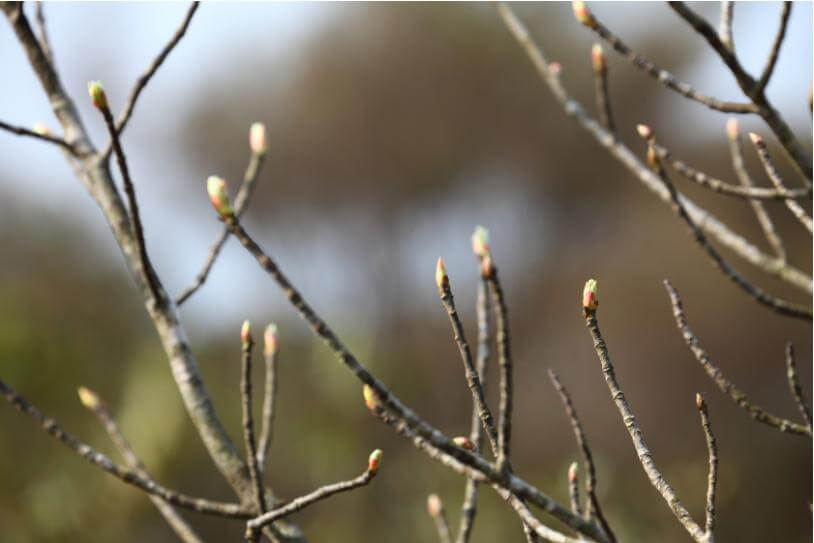
3. Look Closely for Buds
Buds can provide another important clue.
Even when deciduous trees have lost all their leaves, healthy trees often develop buds that remain attached throughout the dormant season. Depending on the species, these buds may be small and difficult to notice.
As spring approaches, healthy buds generally become larger and eventually open.
If surrounding trees of the same type are producing new leaves while your tree has no visible buds or new growth, there may be a health problem that requires closer inspection.
4. Examine the Bark
Healthy bark varies considerably between tree species, so peeling bark doesn’t automatically mean a tree is dying.
However, substantial changes in bark condition can indicate trouble.
Watch for symptoms such as:
- Large areas of missing bark
- Deep cracks or cavities
- Soft or decaying sections
- Unusual discoloration
- Fungal growth around damaged areas
- Significant sections of loose bark
If you’re seeing multiple symptoms, consider scheduling professional tree and shrub health services. A trained professional can evaluate the entire tree rather than relying on a single visible symptom.
5. Check for Signs of Insects or Disease
Sometimes a tree isn’t dead yet but is declining because of pests or disease.
Look closely at the trunk, branches, and remaining foliage for unusual symptoms. Small holes in the bark, abnormal leaf discoloration, unusual growths, premature leaf loss, or widespread branch dieback can all indicate potential problems.
Western North Carolina’s trees can be affected by numerous insects and diseases, making proper diagnosis important.
Epperson Tree Service provides professional insect and disease control to identify and address problems before they cause additional damage.
For hemlock trees specifically, homeowners should also watch for signs of hemlock woolly adelgid. Epperson Tree Service offers specialized hemlock treatment to help protect these valuable trees.
6. Look at the Tree as a Whole
Individual dead branches don’t necessarily mean that an entire tree needs to be removed.
Instead, step back and examine the complete canopy.
Is most of the tree bare while neighboring trees have leafed out? Are large sections of the canopy dead? Is new growth limited to only a small portion of the tree?
Extensive canopy dieback can indicate a serious underlying problem.
Professional evaluation is particularly important when a declining tree is close to a house, driveway, road, power line, or another frequently used area.
When Should a Dead Tree Be Removed?
Once a tree is confirmed to be dead and cannot be restored, removal may be the safest option.
Dead trees gradually lose structural strength as wood begins to deteriorate. Branches can fall, and eventually the trunk or entire tree may become unstable.
This becomes especially concerning during the strong winds and storms that can affect Hendersonville and Western North Carolina.
Epperson Tree Service provides professional tree removal and trimming for trees that pose a risk or can no longer be preserved.
Large or difficult trees may require specialized equipment. In these situations, professional crane services can allow sections of the tree to be carefully removed from challenging locations.
After removal, stump grinding can eliminate the remaining stump and make the area easier to landscape or reuse.
Don’t Remove a Dormant Tree by Mistake
A bare tree isn’t necessarily a dead tree. Seasonal dormancy can make a healthy tree look lifeless for months, particularly during winter and early spring.
Before deciding to remove a questionable tree, check for flexible branches, green tissue beneath the bark, healthy buds, and signs of new seasonal growth. At the same time, watch for widespread dieback, decay, pest activity, or structural problems.
If you still can’t determine whether your tree is dead, dormant, or declining, a professional evaluation can give you a clearer answer.
Epperson Tree Service provides comprehensive tree services in Hendersonville, NC, including tree health care, pruning, trimming, removal, stump grinding, and other solutions for properties throughout Western North Carolina.
Contact Epperson Tree Service today to have a questionable tree inspected and determine the best way to protect your property and surrounding landscape.

