
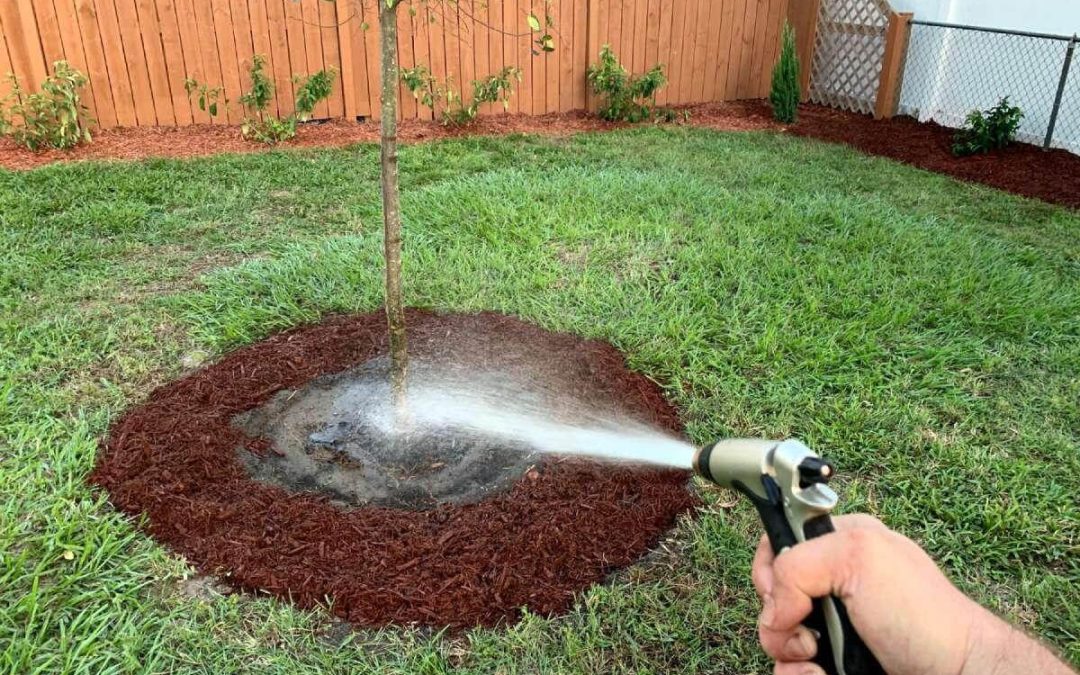
Summer in Hendersonville brings warm temperatures, periods of intense sun, and stretches of dry weather that can put significant stress on trees. While established trees are generally more resilient than lawns or garden plants, they still need adequate moisture to maintain healthy roots, foliage, and new growth.
Young trees are particularly vulnerable because their root systems haven’t had years to spread through the surrounding soil. However, even large mature trees can experience drought stress during prolonged periods without sufficient rainfall.
Knowing when, where, and how much to water can make a major difference. Here’s what Hendersonville homeowners should know about keeping their trees properly hydrated throughout the summer.
How Do You Know When a Tree Needs Water?
One of the biggest mistakes homeowners make is following a rigid watering schedule without checking actual soil conditions.
Rainfall, temperature, soil type, drainage, tree species, and age all affect how quickly the soil dries.
Instead, inspect the soil several inches below the surface. If the soil feels dry at that depth, the tree may need additional water. If it remains moist, watering may not yet be necessary.
Signs of possible drought stress can include:
- Wilting or curling leaves
- Browning leaf edges
- Yellowing foliage
- Premature leaf drop
- Reduced new growth
- Dry soil around the root zone
These symptoms can also be caused by insects, diseases, root problems, or excessive water, so avoid assuming that every unhealthy-looking tree simply needs more irrigation.
If symptoms continue despite proper watering, Epperson Tree Service’s tree and shrub health services can help identify the underlying problem.
Young Trees Need Extra Attention
Recently planted trees generally require more consistent watering than mature trees.
Their root systems are still concentrated around the original root ball and haven’t expanded far enough to access moisture throughout a larger area.
During hot, dry periods, check newly planted trees regularly.
Water should penetrate deeply into the root zone rather than only wetting the surface. Light daily sprinkling can encourage shallow moisture patterns without providing enough water deeper in the soil.
As the tree becomes established, its roots will gradually expand and become better able to access naturally available moisture.
Established Trees Can Still Experience Drought Stress
A large tree may look virtually indestructible, but mature trees aren’t immune to drought.
Their extensive root systems give them access to a much larger area of soil, but prolonged hot and dry conditions can still create significant stress.
Large trees also have much bigger canopies to support.
Pay particular attention to trees growing in challenging locations, including:
- Exposed slopes
- Areas with thin soil
- Sites receiving intense afternoon sun
- Locations near pavement
- Compacted soil
- Recently disturbed landscapes
Trees affected by recent construction or grading may also be more vulnerable because their root systems could have been disturbed.
Deep Watering Is Better Than Frequent Shallow Watering
For most landscape trees, the goal should be to deliver water where the roots can actually use it.
A brief spray from a garden hose may make the soil surface look wet while leaving deeper soil relatively dry.
Slow, deep watering allows moisture to penetrate farther into the soil.
A soaker hose or slow-flowing hose can be useful because it delivers water gradually rather than allowing it to immediately run across the surface.
The exact amount and frequency will depend on the tree, soil, recent rainfall, and weather conditions. Rather than focusing on a universal number of minutes, check how deeply the moisture is actually penetrating.
Water the Root Zone, Not Just the Trunk
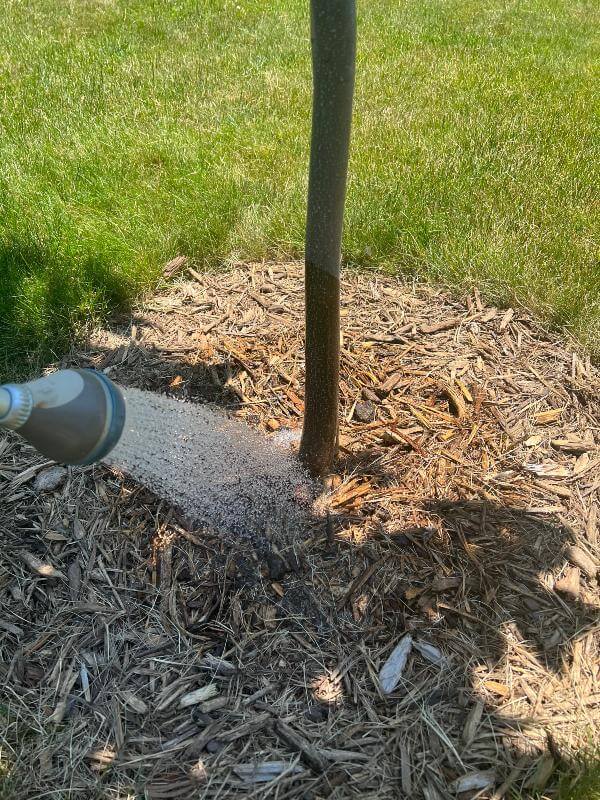
Another common mistake is applying all the water directly against the tree trunk.
For established trees, many water-absorbing roots extend outward beneath and beyond the canopy.
Instead of concentrating water in one small area around the trunk, distribute it throughout the root zone.
For newly planted trees, you’ll initially focus more heavily around the root ball. As the tree establishes, expand the watering area outward.
Avoid continuously saturating the trunk itself.
What Time of Day Should You Water Trees?
Morning is generally an excellent time to water.
Temperatures are cooler, evaporation is typically lower, and the soil has time to absorb moisture before the hottest part of the day.
Late-day watering can also reduce evaporation compared with midday watering, but avoid unnecessarily keeping foliage wet for extended periods.
When watering trees, focus primarily on delivering moisture to the soil and root system rather than spraying the canopy.
Mulch Can Help Keep Soil Moist
A proper layer of mulch can make summer tree care easier.
Mulch helps reduce evaporation, moderate soil temperature, and limit competition from grass and weeds around the tree.
Spread mulch over the root area, but keep it away from direct contact with the trunk.
Avoid creating the familiar “mulch volcano” where mulch is piled high against the bark. Excessive mulch against the trunk can trap moisture and create conditions that contribute to bark and root problems.
Think of mulch as a wide protective layer over the soil rather than a mound around the trunk.
Can You Overwater a Tree?
Yes. More water isn’t always better.
Roots need both moisture and oxygen. When soil remains constantly saturated, oxygen availability can decrease and root problems may develop.
Overwatering can sometimes produce symptoms that resemble drought stress, including yellow leaves and declining growth.
This is another reason checking the soil is important.
Poor drainage can also be a major factor. If water consistently pools around your trees long after rainfall or irrigation, the problem may involve the site itself rather than your watering schedule.
Don’t Automatically Fertilize a Drought-Stressed Tree
If a tree looks weak during summer, adding fertilizer might seem like an obvious solution.
However, fertilization doesn’t replace proper watering and isn’t appropriate for every stressed tree.
Nutrient treatments should be based on the tree’s actual condition and needs. Epperson Tree Service provides professional fertilization services as part of its broader plant health care program.
A professional evaluation can determine whether nutrient deficiencies are contributing to poor growth or whether another issue needs to be addressed first.
Watch for Insects and Disease During Summer
Summer stress can make existing tree problems more noticeable.
Inspect trees periodically for unusual leaf discoloration, holes in bark, abnormal growths, premature leaf loss, dying branches, or visible insects.
Watering alone won’t correct a pest infestation or disease.
Epperson Tree Service provides professional insect and disease control for trees and shrubs throughout Hendersonville and Western North Carolina.
Hemlocks deserve particular attention. These trees can be threatened by hemlock woolly adelgid, and Epperson Tree Service offers specialized hemlock treatment to help protect affected trees.
When Should You Call a Tree Care Professional?
If your tree continues declining despite adequate watering, the problem may go beyond normal summer drought stress.
Large dead branches, significant canopy thinning, unusual discoloration, bark damage, insect activity, fungal growth, or rapid decline can indicate more serious issues.
Professional evaluation can help determine whether the tree needs pruning, pest or disease treatment, fertilization, structural support, or another form of care.
Epperson Tree Service offers comprehensive tree services in Hendersonville, NC for both routine maintenance and more complex tree health concerns.
Keep Your Hendersonville Trees Healthy This Summer
Summer watering doesn’t have to be complicated. The most important principles are to monitor soil moisture, water deeply when necessary, distribute water throughout the root zone, and pay extra attention to young or recently stressed trees.
Remember that both too little and too much water can create problems.
If your trees continue showing signs of stress even with proper watering, there may be an underlying health issue that requires professional attention.
Contact Epperson Tree Service for professional tree and shrub health care in Hendersonville and surrounding Western North Carolina communities, and give your trees the support they need to stay healthy throughout the summer.

