
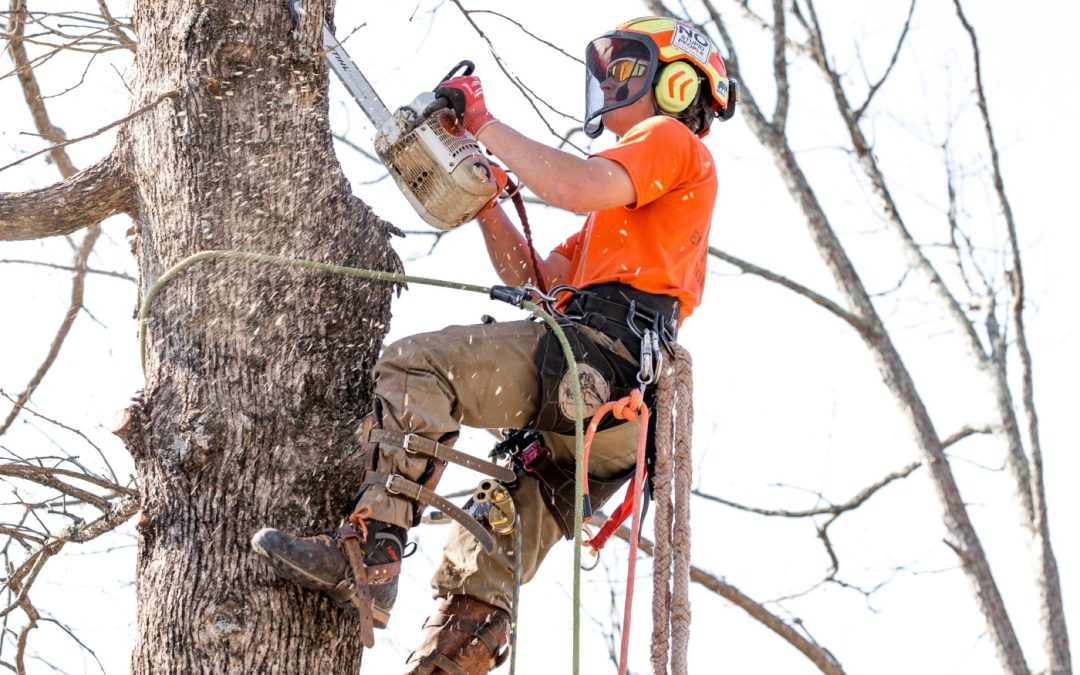
When a tree grows too large or begins interfering with power lines, rooftops, or neighboring properties, many homeowners start looking for a fast solution. One of the most commonly requested — and most harmful — practices is tree topping. While it may seem like an easy way to reduce the size of a tree quickly, topping creates serious long-term problems that can compromise the health, safety, and appearance of your landscape.
For homeowners in Western North Carolina, where mature trees are a major part of the natural beauty of the region, understanding the risks of tree topping is essential. At Epperson Tree Service, we often help property owners correct the damage caused by improper pruning and educate them on healthier alternatives that protect both their trees and their property.
What Is Tree Topping?
Tree topping is the aggressive cutting back of large branches or the upper portion of a tree’s canopy. Instead of selectively pruning branches to maintain the tree’s natural structure, topping removes a significant percentage of the canopy all at once, often leaving behind large stubs or bare limbs.
Some people request topping because they want to:
- Reduce the height of a tree
- Prevent storm damage
- Stop leaves from falling
- Improve views
- Keep trees away from structures
- Reduce shading on lawns or gardens
Although these goals may seem reasonable, topping is rarely the correct solution. In fact, professional arborists and tree care organizations strongly discourage the practice because of the lasting damage it causes.
Why Tree Topping Is Harmful
Severe Stress on the Tree
Trees depend on their leaves to produce food through photosynthesis. When a large portion of the canopy is suddenly removed, the tree loses its primary energy source almost instantly.
This creates tremendous stress and forces the tree into survival mode. Instead of focusing on healthy growth and disease resistance, the tree uses its stored energy reserves to produce emergency shoots and recover from the damage.
In Western North Carolina’s changing climate, stressed trees become more vulnerable to:
- Drought
- Heat stress
- Insect infestations
- Fungal disease
- Root decline
- Storm damage
Over time, topping can dramatically shorten the lifespan of a tree.
Weak and Dangerous Regrowth
One of the biggest misconceptions about topping is that it permanently reduces the size of a tree. In reality, topped trees often grow back faster than before.
After topping, trees produce rapid “water sprouts” or sucker growth near the cut areas. These shoots grow quickly because the tree is trying desperately to replace lost foliage.
The problem is that these new branches are weakly attached. Unlike naturally developed limbs, they grow from the outer layer of wood rather than deep structural tissue. This makes them highly prone to breaking during storms, high winds, or heavy snow.
In areas like Hendersonville and surrounding mountain communities, where severe weather and ice storms are common, weak regrowth can create major hazards for homes, vehicles, and people below.
Topping Increases the Risk of Disease and Decay
Large topping cuts expose the inner wood of the tree to moisture, insects, and decay organisms. Trees struggle to properly seal these oversized wounds, especially when multiple large branches are removed at once.
This can lead to:
- Internal rot
- Fungal infections
- Hollow trunks
- Structural instability
- Increased insect activity
Once decay enters the tree, it may continue spreading for years, even if the tree initially appears healthy from the outside.
Many homeowners don’t realize the danger until large limbs begin failing or the tree becomes unstable enough to require emergency removal.
Poor Appearance and Reduced Property Value
Healthy trees add beauty, shade, and value to a property. Topped trees, however, often look unnatural, disfigured, and unhealthy.
Instead of a balanced canopy, topped trees develop:
- Bare branch stubs
- Uneven growth
- Dense clusters of weak shoots
- Misshapen crowns
- Sparse foliage
This not only affects curb appeal but can also reduce property value. In neighborhoods where landscaping plays an important role in home appearance, poorly maintained trees can stand out for the wrong reasons.
Topping Does Not Make Trees Safer
Some homeowners assume topping reduces storm risk because the tree is smaller. In reality, topping often makes trees more dangerous over time.
Weak regrowth, decay, and structural instability all increase the likelihood of limb failure. Additionally, topped trees can become more susceptible to uprooting because the stress weakens the overall health of the tree.
Rather than preventing storm damage, topping can actually increase the chances of expensive emergency situations later.
Better Alternatives to Tree Topping
Fortunately, there are safer and healthier ways to manage tree size and reduce risk without damaging the tree.
Crown Reduction
Crown reduction is a professional pruning method that selectively shortens branches while preserving the tree’s natural shape and structure. This technique reduces size without shocking the tree.
Crown Thinning
Thinning removes selected interior branches to improve airflow and reduce wind resistance while maintaining the canopy’s appearance.
Structural Pruning
Young and mature trees can benefit from structural pruning that improves branch spacing, stability, and long-term health.
Tree Removal and Replacement
In some situations, a tree may simply be too large for its location. Instead of repeatedly topping it, removal and replacement with a better-suited species may be the safer long-term solution.
A professional tree service can help determine the best approach based on the tree species, location, condition, and surrounding structures.
The Importance of Professional Tree Care
Tree pruning is not just about appearance — it directly affects the health and safety of your landscape. Improper cuts can create permanent damage that may not become obvious for years.
At Epperson Tree Service, we help homeowners throughout Western North Carolina care for their trees using safe, industry-approved pruning methods that preserve both beauty and structural integrity.
Whether you need storm preparation, hazardous limb removal, canopy management, or a professional assessment of a damaged tree, working with experienced professionals ensures the job is done correctly.
Final Thoughts
Tree topping may seem like a quick fix, but the long-term consequences can be severe. From weak regrowth and disease to increased storm hazards and declining tree health, topping often creates far more problems than it solves.
Healthy trees are valuable investments that deserve proper care. By choosing professional pruning methods instead of aggressive topping, homeowners can maintain safer, stronger, and more attractive landscapes for years to come.
If you are concerned about oversized trees on your property, Epperson Tree Service can help you explore safe, effective solutions that protect both your home and your trees.

