
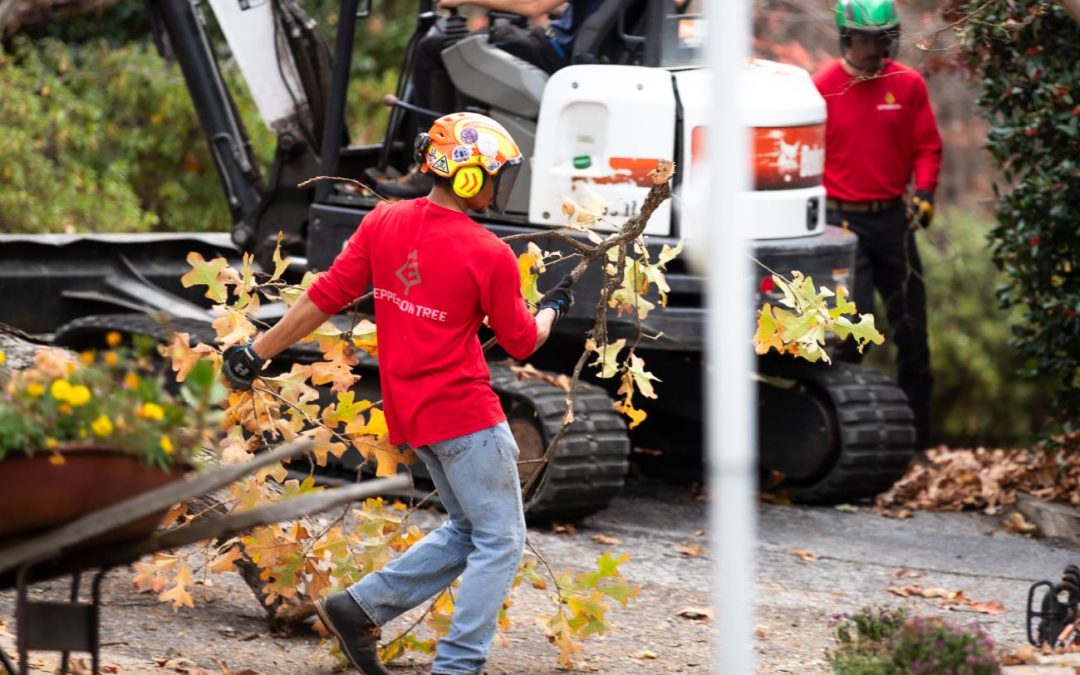
When a tree falls, the first question most homeowners ask isn’t just “How do I clean this up?”—it’s “Who is responsible for the damage?”
In areas like Hendersonville, NC, where storms and high winds are common, fallen tree situations happen more often than you might expect. The answer to who pays depends on several factors, including where the tree came from, why it fell, and whether negligence was involved.
Let’s break it down so you know exactly what to expect.
The “Act of God” Rule (Most Common Scenario)
In many cases, fallen trees are the result of storms, strong winds, or other natural events. Insurance companies typically refer to these as “acts of God.”
If a healthy tree falls due to a storm:
- Each homeowner is responsible for their own property damage
- Your insurance covers damage to your home, garage, or belongings
- Your neighbor’s insurance covers their property if the tree lands on their side
This means that even if your neighbor’s tree falls onto your house, you’ll usually file a claim with your own insurance company.
When a Neighbor May Be Liable
There are situations where your neighbor could be responsible—but negligence must be proven.
A neighbor may be liable if:
- The tree was clearly dead, diseased, or damaged
- They were aware of the issue but failed to act
- The tree posed an obvious risk before it fell
For example, if a tree had visible decay or was leaning dangerously for months and nothing was done, liability may shift to the tree owner.
However, proving negligence often requires:
- Photos or documentation of the tree’s condition
- Records of complaints or notices
- Professional assessments
Without evidence, it usually defaults back to the “act of God” rule.
What Happens If Your Tree Falls on a Neighbor’s Property?
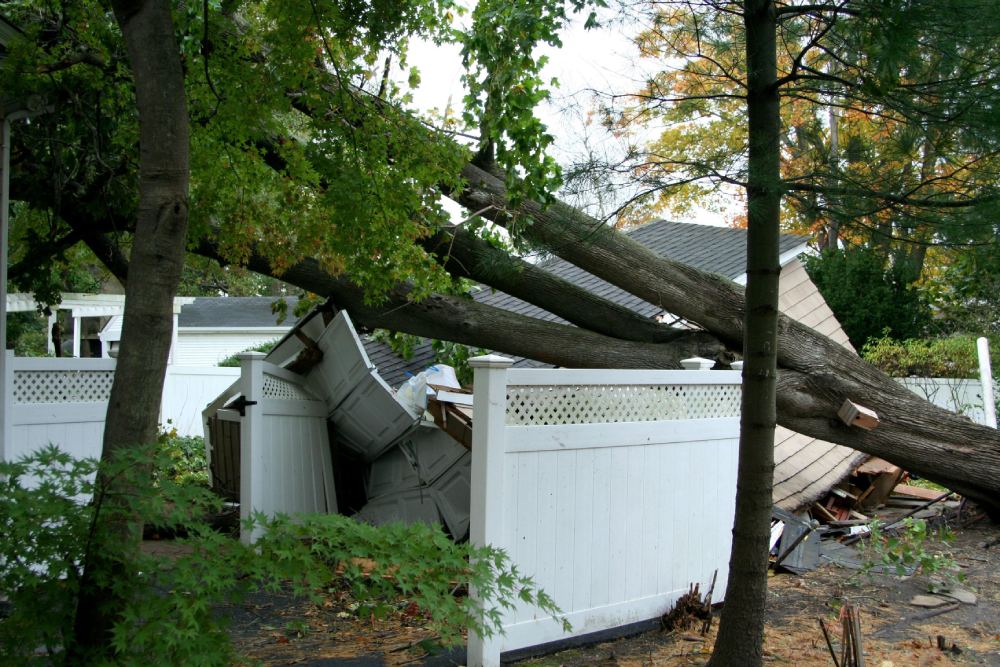
This is where many homeowners get confused.
If your healthy tree falls during a storm and damages your neighbor’s property:
- You are typically not responsible
- Your neighbor files a claim with their insurance
However, if your tree was known to be hazardous and you ignored the issue, you could be held liable for damages.
Who Pays for Tree Removal?
Tree removal costs depend on where the tree lands—not where it came from.
General rule:
- If the tree falls on your property, you pay for removal
- If it falls across multiple properties, costs may be shared
Insurance may cover removal if:
- The tree damaged a covered structure (like your home)
- The tree is blocking access, such as a driveway
If the tree falls in your yard without damaging anything, removal may not be covered.
What About Trees Blocking Shared Areas or Property Lines?
If a tree falls across a property line:
- Each homeowner is usually responsible for the portion on their property
- Costs may be split if both parties agree
In some cases, neighbors work together to handle removal quickly—especially when access or safety is affected.
What If a Tree Falls on Your Car?
If a tree damages your vehicle, coverage depends on your auto insurance policy.
- Comprehensive coverage typically covers tree damage
- Liability coverage alone usually does not
Whether the tree came from your yard or a neighbor’s yard, your own auto policy is usually the first place to file a claim.
Steps to Take After a Tree Falls
If you’re dealing with a fallen tree situation in Hendersonville, NC, follow these steps:
1. Ensure Safety
Stay clear of the area, especially if there are downed power lines or unstable debris.
2. Document Everything
Take clear photos of:
- The tree’s origin
- The damage caused
- Property boundaries (if relevant)
3. Contact Your Insurance Company
Report the incident as soon as possible and provide documentation.
4. Call a Professional Tree Service
A company like Epperson Tree can safely remove the tree and help prevent further damage.
5. Communicate With Neighbors (If Involved)
If the tree affects multiple properties, clear communication can help resolve the situation quickly and avoid disputes.
Why Documentation Matters
When it comes to liability, documentation is everything. Without proof of negligence, insurance companies will almost always default to standard coverage rules.
Keeping records of tree maintenance, inspections, and any concerns about neighboring trees can protect you in the long run.
Preventing Future Liability Issues
The best way to avoid disputes is to stay proactive.
- Inspect trees regularly
- Remove dead or damaged trees early
- Address potential hazards promptly
- Communicate with neighbors about risky trees
Taking these steps not only protects your property but also reduces the chance of legal or insurance complications.
Get Expert Help When It Matters Most
Fallen trees can quickly turn into stressful situations, especially when multiple properties or insurance claims are involved. Having a reliable, local expert makes the process much easier.
In Hendersonville, NC, Epperson Tree provides fast, professional emergency tree services to handle everything from removal to cleanup—helping you restore safety and peace of mind without the guesswork.

